
Quick Summary
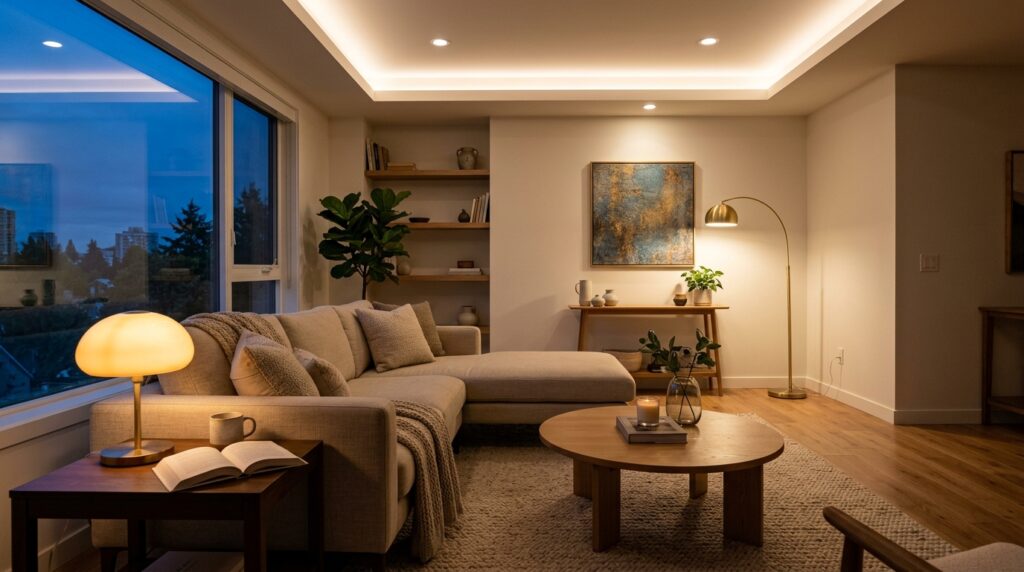
If a room feels flat or “off” despite good furniture, the lighting is usually the reason. Modern lighting ideas for 2026 center on layering ambient, task, and accent light at warm color temperatures, rather than relying on one bright overhead fixture.
Modern lighting ideas rarely get credit for how much they actually change a room, and that’s exactly why so many beautifully furnished spaces still feel a little flat. You’ve probably walked into a room like this yourself — nice furniture, decent layout, and yet something about it feels unfinished, even a little cold.
Nine times out of ten, that feeling has nothing to do with the furniture. It’s the lighting. A single ceiling fixture washing the whole room in flat, even light is one of the most common reasons a space feels unfinished, no matter how much money went into the decor around it.
This guide breaks down exactly how designers use lighting to make a home feel intentional, warm, and expensive — without needing a full renovation budget.
Already working on your bedroom? Our Master Luxury Bedroom Ideas 2026 guide pairs well with everything covered here.
At a Glance
- One ceiling fixture is almost never enough — modern rooms need at least three light layers
- Warm light (2700K–3000K) reads as expensive; cool blue-white light reads as cheap and clinical
- Dimmers are one of the highest-impact, lowest-cost lighting upgrades you can make
- Lighting height matters as much as brightness — varying heights keeps the eye moving through a room
- A single well-placed lamp can do more for a room’s mood than an entire furniture rearrangement
Table of Contents
1. Why One Ceiling Light Is Never Enough
2. Layer Ambient, Task, and Accent Lighting Together
3. Choose Warm Light Temperature Over Cool White
4. Add Dimmers Before Buying New Fixtures
5. Vary Lighting Height to Guide the Eye
6. Use Table and Floor Lamps as Furniture, Not Filler
7. Highlight Texture and Art With Accent Lighting
8. Choose Warm Metal Finishes for Fixtures
9. Mistakes That Make a Room Feel Flat or Cold
10. Pro Tips to Upgrade Lighting on a Budget
Comparison Table: Lighting Layers Explained
Final Thoughts
Frequently Asked Questions
1. Why One Ceiling Light Is Never Enough
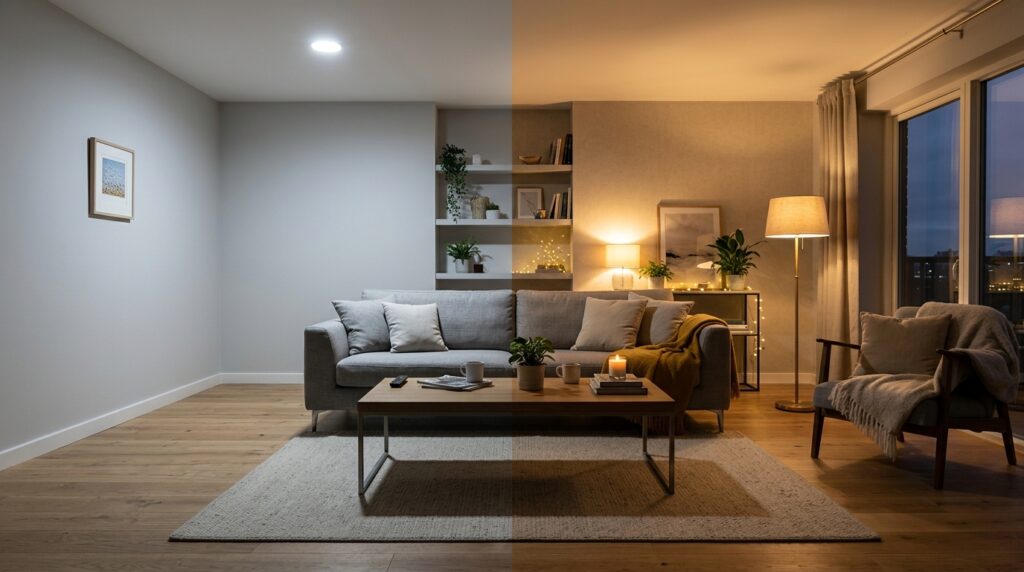
Modern lighting design almost never relies on a single overhead fixture, because one light source can only do one job — and a room needs several. Flat overhead lighting flattens everything else in the space along with it.
- A single ceiling light creates harsh shadows directly beneath furniture and people, which no amount of decor can fix
- Rooms lit by one source alone tend to feel flat and function-only, rather than lived-in
- Designers treat lighting as part of the floor plan now, not an afterthought added at the end
I used to think my living room just needed better furniture. Turns out it needed better light — the furniture was fine the whole time.
2. Layer Ambient, Task, and Accent Lighting Together
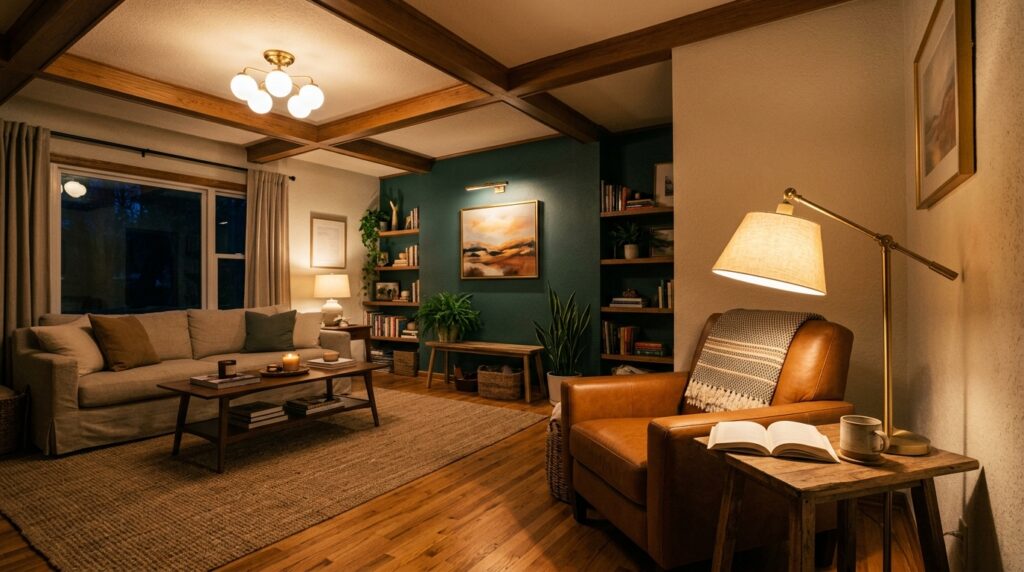
Layered lighting means combining three types of light — ambient, task, and accent — so a room adapts to different times of day instead of staying one flat brightness all evening.
- Ambient lighting is your foundation — general, diffused light that fills the room and makes it navigable
- Task lighting is focused and functional, like a desk lamp or under-cabinet light for specific activities
- Accent lighting adds depth by highlighting art, shelving, or architectural details rather than lighting the whole room
If your living room only has one ceiling light right now, you’re missing at least two of these layers — and that gap is usually exactly what makes a room feel unfinished.
3. Choose Warm Light Temperature Over Cool White
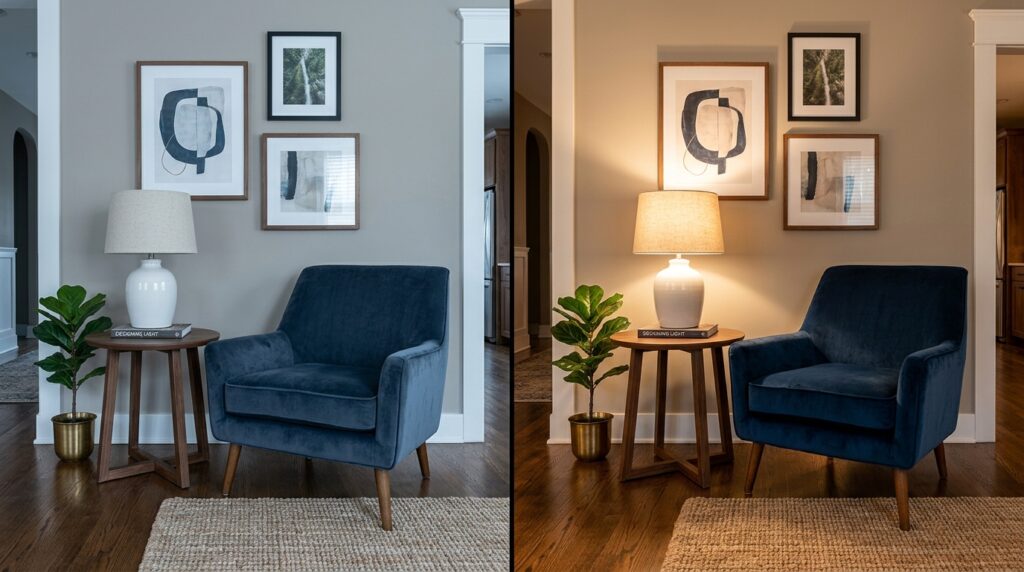
Modern lighting color temperature makes a bigger difference than most people expect — warm light (2700K–3000K) reads as cozy and expensive, while cool blue-white light reads as clinical and cheap.
- Bright, blue-toned lighting is officially falling out of favor in modern interior design
- Warm tones flatter skin, materials, and furniture finishes far better than cool white does
- Check the Kelvin rating on any bulb before buying — it’s usually printed right on the packaging
Swapping cool white bulbs for warm ones was one of the cheapest changes I ever made, and it did more for my living room’s mood than any piece of decor I’ve bought since.
4. Add Dimmers Before Buying New Fixtures
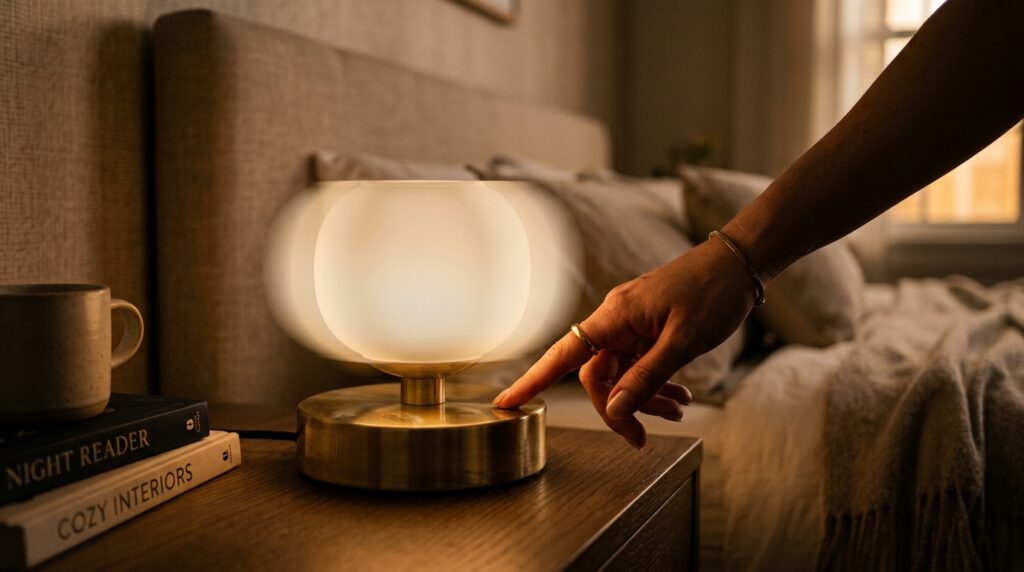
Modern lighting control matters as much as the fixtures themselves — dimmers let a single light source shift from bright and functional to soft and atmospheric in seconds.
- The ability to shift a room’s atmosphere instantly has become a standard expectation in modern design
- Plug-in dimmer switches work on existing lamps without any rewiring, which matters if you’re renting
- A dimmed lamp in the evening does more for ambiance than an extra decorative object ever could
A simple lamp with 3-way touch control changed how I use my bedroom lighting entirely — bright for reading, soft for winding down, no separate lamps required.
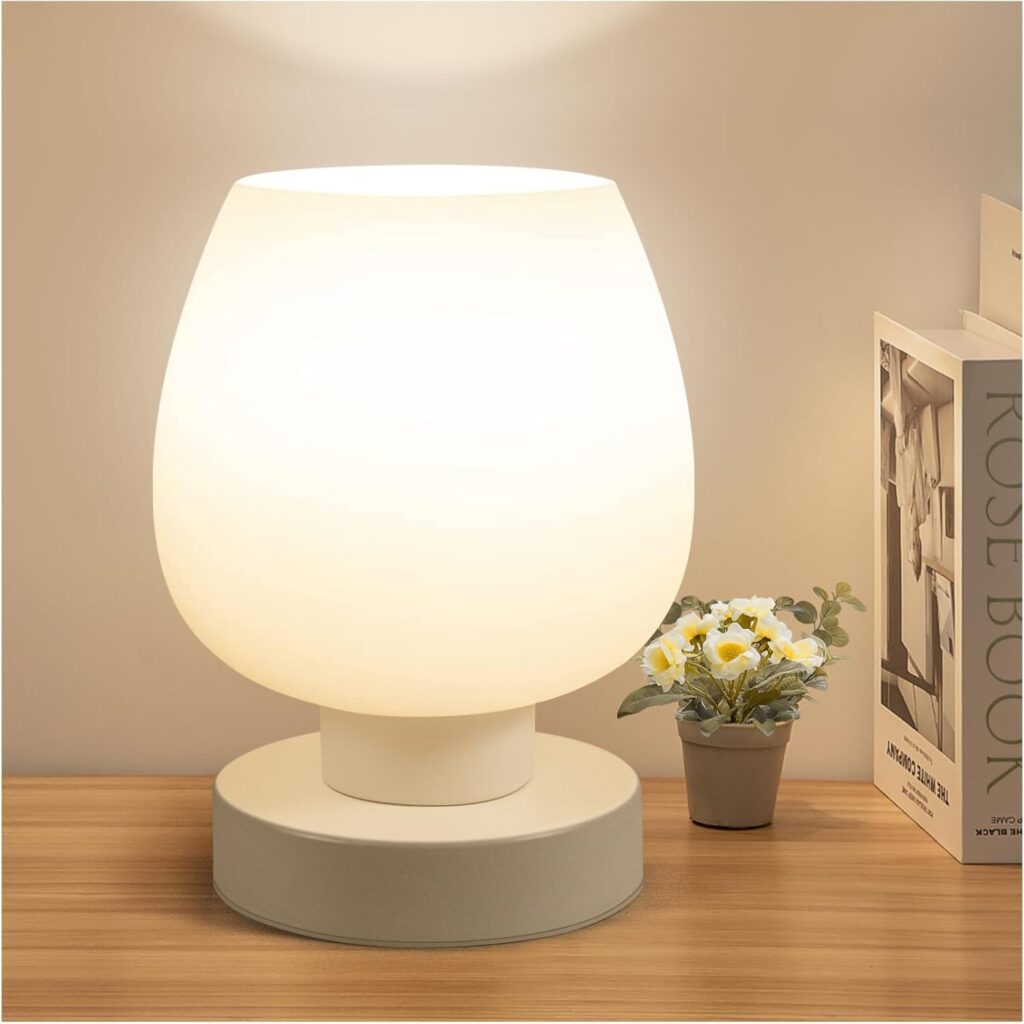
5. Vary Lighting Height to Guide the Eye
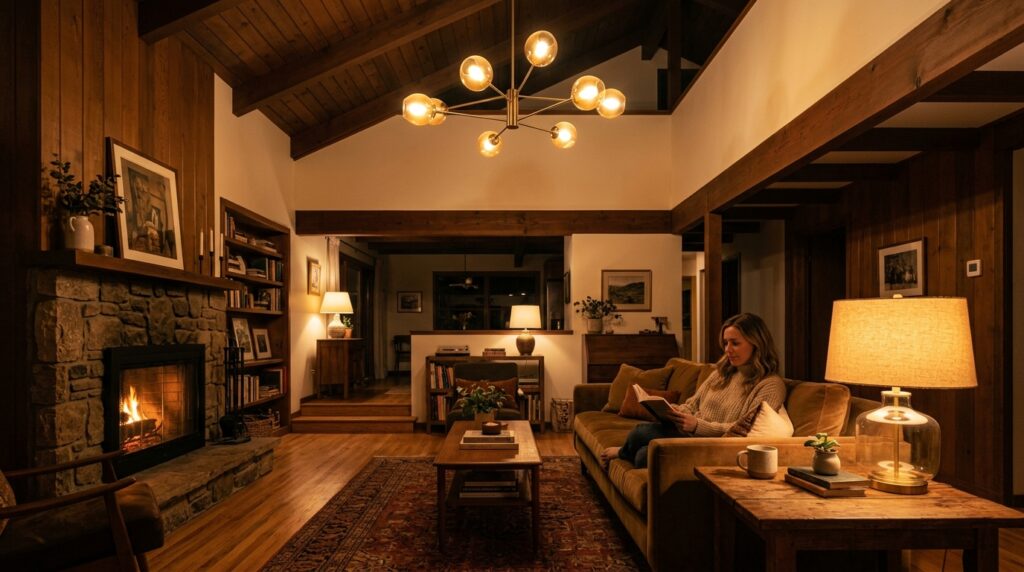
Modern lighting placement isn’t just about brightness — it’s about height. Sources positioned at different levels keep the eye moving through a room instead of settling flatly on one plane.
- Low light draws the eye down and creates intimacy, like a table lamp near seating
- High light lifts and expands a space, which is why pendant lights feel more dramatic than table lamps
- Each light source should be independently controllable so you can adjust the mix depending on the moment
Once I started thinking about height instead of just brightness, my whole living room felt more dimensional — the same bulbs, just placed with more intention.
6. Use Table and Floor Lamps as Furniture, Not Filler
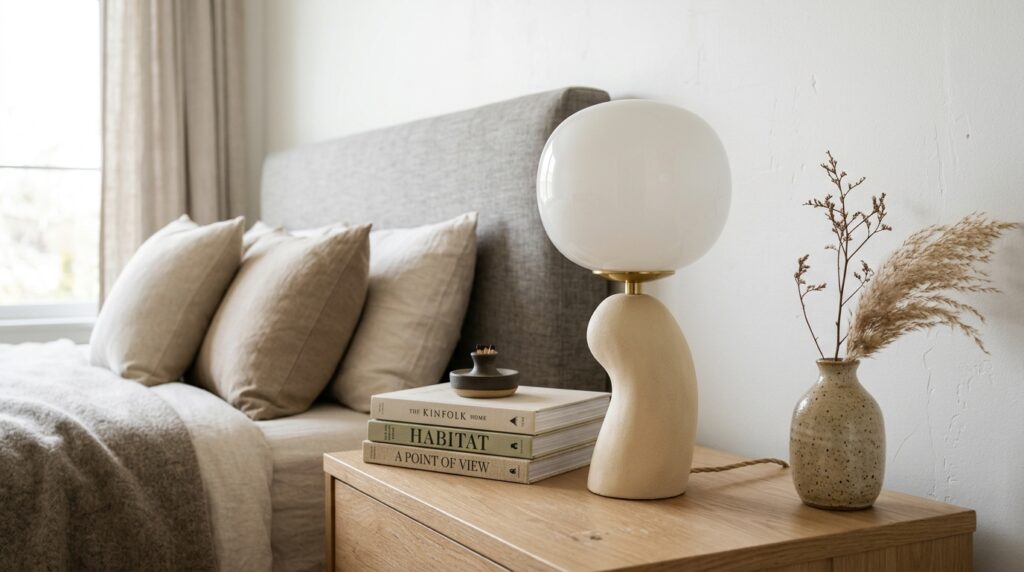
Modern lighting for living rooms works best when lamps are chosen as intentionally as any other piece of furniture, not grabbed as an afterthought once everything else is placed.
- Cordless lamps have grown in popularity because they add flexible light without rewiring, and move easily between rooms
- A lamp with a sculptural or interesting shape doubles as decor even when it’s switched off
- Choose a shade material — glass, linen, ceramic — that diffuses light softly rather than casting a harsh, direct beam
The lamp on my nightstand gets more compliments than almost anything else in the room, and it wasn’t expensive — it just does its job well and looks good doing it.
7. Highlight Texture and Art With Accent Lighting
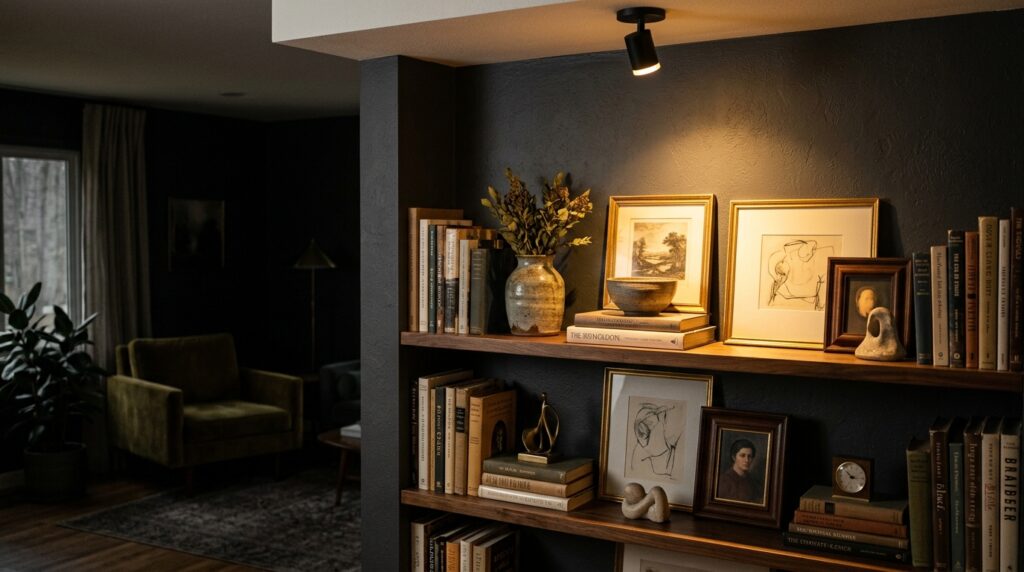
Modern accent lighting draws attention to the details a room already has — art, shelving, textured walls — rather than adding more brightness to the whole space.
- A small directional light aimed at artwork or a bookshelf adds depth without raising overall brightness
- Accent lighting works especially well in rooms with limited natural daylight, filling in visual interest after dark
- Even one accent light can make a plain wall feel like a designed feature instead of empty space
A single small light aimed at a bookshelf did more to make my living room feel “designed” than the shelf styling itself ever did on its own.
8. Choose Warm Metal Finishes for Fixtures
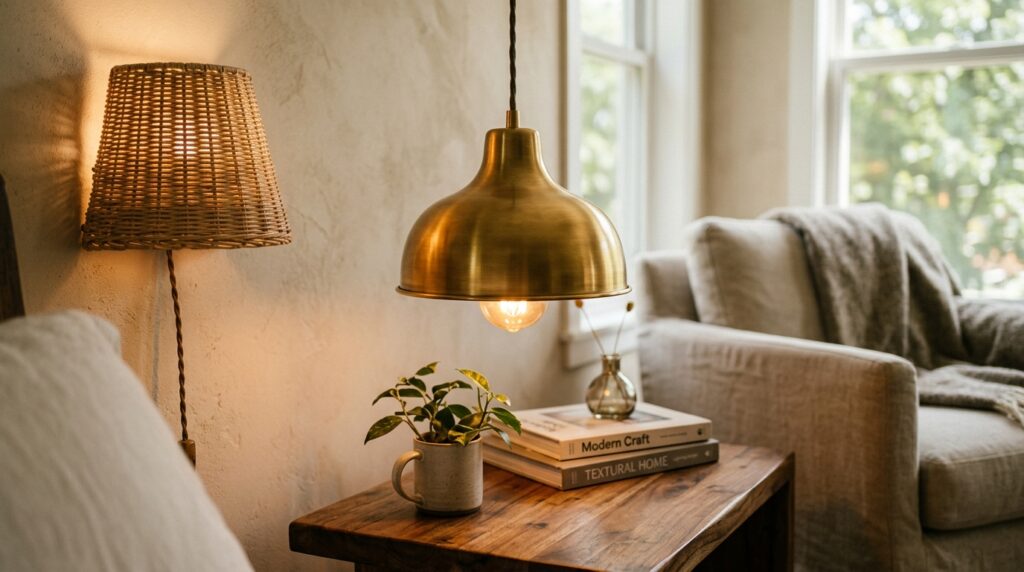
Modern lighting fixture finishes have shifted decisively toward warm metals — brass, bronze, and aged gold are replacing the matte black and brushed nickel that dominated the last decade.
- Warm metal fixtures catch and reflect light more flatteringly than cool-toned finishes
- Mixing metal with natural materials — wood, ceramic, woven textures — is a defining look in current lighting design
- You don’t need to replace every fixture at once — starting with one lamp is enough to test the direction
Looking to bring warmth into a bedroom specifically? Our Dark Moody Boho Bedroom Ideas guide covers how warm lighting pairs with deeper color palettes.
9. Mistakes That Make a Room Feel Flat or Cold
Most modern lighting mistakes come from treating light as purely functional instead of as part of the room’s overall design.
- Relying on a single overhead fixture as the only light source in a room
- Using cool white or daylight bulbs in spaces meant to feel relaxing, like bedrooms and living rooms
- Skipping dimmers, which forces a room to stay at one brightness no matter the time of day
- Placing every light source at the same height, which flattens the room instead of adding dimension
- Choosing fixtures based only on how they look off, without checking how the light itself feels once switched on
Nearly every one of these mistakes comes down to the same root cause — treating lighting as an afterthought instead of planning it alongside furniture and layout from the start.
10. Pro Tips to Upgrade Lighting on a Budget
Modern lighting upgrades don’t require an electrician or a full renovation — most of what makes the biggest difference is inexpensive and reversible.
- Swap bulbs to warm white (2700K–3000K) before buying any new fixtures — it’s the cheapest change with the biggest visual impact
- Add one table or floor lamp to any room that currently relies on a single overhead light
- Use a plug-in dimmer switch on existing lamps instead of rewiring anything
- Treat one lamp as a small furniture investment rather than an afterthought purchase
- Test placement before committing — move a lamp around the room for a few days to see where it actually earns its space
According to Arteriors’ 2026 lighting guide, thoughtful lighting is one of the biggest differentiators between a room that’s simply furnished and one that actually feels finished — and that difference rarely comes down to budget.
Comparison Table: Lighting Layers Explained
Not sure which layer your room is missing? Here’s how the three core types of modern lighting compare.
| Light Type | Purpose | Examples |
|---|---|---|
| Ambient | General, diffused room illumination | Ceiling fixtures, recessed lighting |
| Task | Focused light for specific activities | Desk lamps, bedside lamps, under-cabinet lights |
| Accent | Highlighting art, texture, or architecture | Directional spotlights, wall sconces |
Final Thoughts
Modern lighting ideas ultimately come down to one shift in thinking — treating light as part of the room’s design, not just a way to see in the dark. Start with warm bulbs and one added lamp, then build up layers over time. The rooms that feel the most finished are rarely the most expensive ones — they’re the ones lit with intention.
Not sure where to start in your own space? Feel free to reach out — I’m always happy to help you figure it out.
Frequently Asked Questions
Why does my room feel unfinished even with good furniture?
This is almost always a lighting issue. A single overhead fixture flattens a room, while layered ambient, task, and accent lighting adds the depth that makes a space feel complete.
What color temperature should I use for modern lighting?
Warm white light between 2700K and 3000K is best for living rooms and bedrooms. Cooler, blue-toned light tends to feel clinical and is best reserved for task-focused spaces like garages or workshops.
Do I need an electrician to improve my home’s lighting?
No. Swapping bulbs, adding a table or floor lamp, and using plug-in dimmers all improve lighting significantly without any rewiring or professional installation.
How many light sources does a living room actually need?
Most designers recommend at least three: one ambient source for general light, one task light for specific activities, and one accent light to add depth and highlight features in the room.
What’s the cheapest way to upgrade lighting?
Swapping existing bulbs for warm white (2700K–3000K) versions is the cheapest, highest-impact change. Adding one affordable table lamp is the next easiest step.
Pingback: Black Accent Wall Ideas That Look Amazing in Real Rooms