
Quick Summary
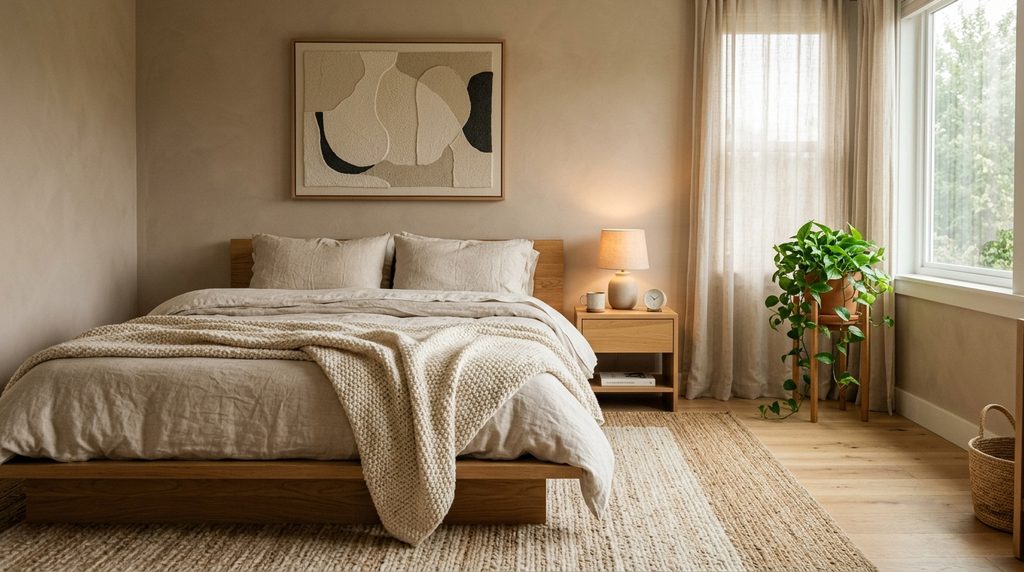
Minimalist bedroom decor ideas feel empty when they focus only on removing things. The real trick is replacing clutter with a few intentional layers — texture, warm lighting, and one or two meaningful pieces — so the room reads as calm, not bare.
Minimalist bedroom decor ideas have a branding problem. Search the term and half the images you’ll find look genuinely uninviting — white walls, one bed, nothing else, like a room nobody actually lives in. That’s not minimalism working correctly. That’s just a room with things removed and nothing added back.
I made this exact mistake the first time I tried it. I donated almost everything, painted the walls white, and ended up with a bedroom that felt more like a waiting room than a place to sleep. It took a while to realize the problem wasn’t that I’d removed too much — it was that I hadn’t added the right things back.
This guide is built around that lesson. Every idea here is about creating calm through intention, not emptiness through subtraction.
Working with a genuinely tight footprint? Our Small Bedroom Aesthetic guide covers layout tricks that pair well with everything here.
At a Glance
- Warm neutrals like oatmeal and taupe read as calm; stark white reads as cold and clinical
- Texture is what separates minimal from empty — layer at least three different materials
- One meaningful piece of art or furniture does more than several small decorative objects
- Warm, layered lighting matters as much as what’s on the walls
- Minimalism is a filter for what you keep, not a rule that empty rooms are the goal
Table of Contents
1. Choose Warm Neutrals Over Stark White
2. Layer Texture Instead of Adding More Objects
3. Choose One Meaningful Piece Over Several Small Ones
4. Use Warm, Layered Lighting Instead of One Bright Source
5. Bring in Natural Wood for Grounding Warmth
6. Keep the Floor Open to Create Breathing Room
7. Choose Furniture That Serves More Than One Purpose
8. Add One Plant for Life Without Adding Clutter
9. Mistakes That Make Minimalist Bedrooms Feel Cold
10. Pro Tips to Build This Look Gradually
Final Thoughts
Frequently Asked Questions
1. Choose Warm Neutrals Over Stark White
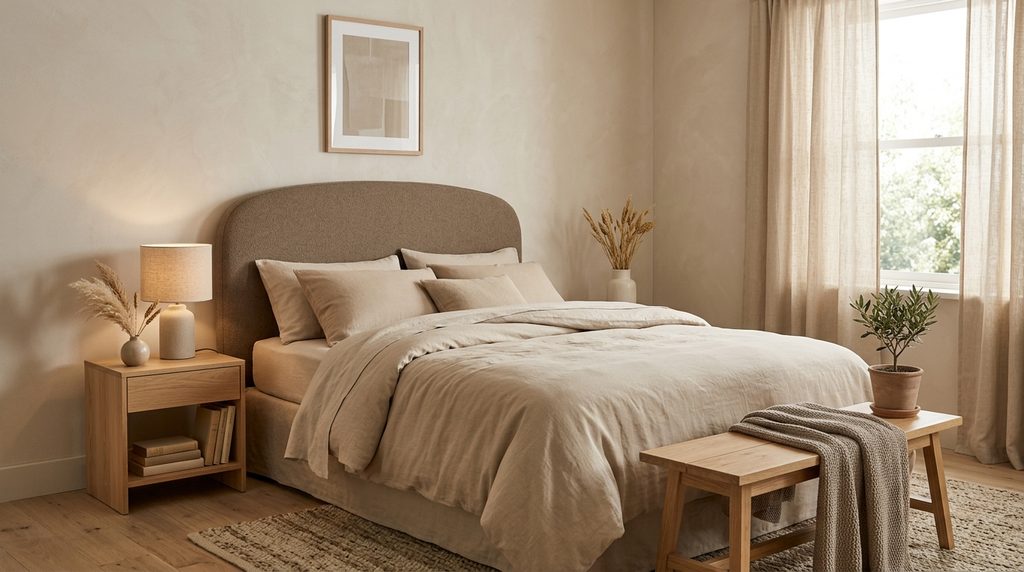
Minimalist bedroom color palette choices set the entire tone before anything else gets decided. Warm neutrals like oatmeal, taupe, and soft sand read as calm; stark white reads as cold and clinical.
- Oatmeal, warm greige, and muted terracotta are replacing cool white as the go-to minimalist base
- Warm tones genuinely help the room feel more restful — they’re easier on the eyes at the end of a long day
- A single warm neutral used consistently across walls and bedding creates cohesion without needing pattern
My first attempt used bright white everywhere, and it felt sterile the moment I finished. Switching the walls to a warm oatmeal tone was a small change that made the whole room feel noticeably calmer.
2. Layer Texture Instead of Adding More Objects
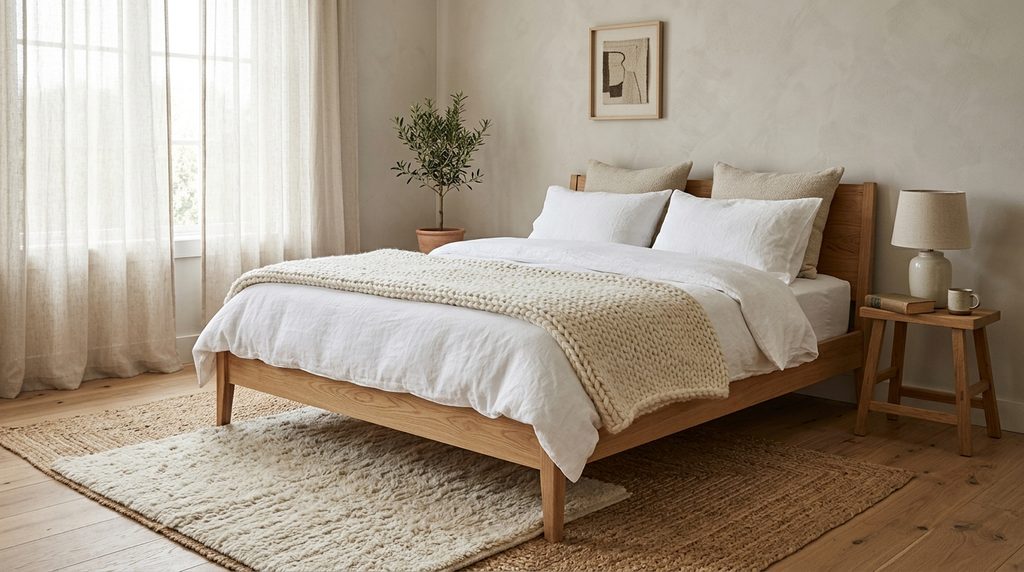
Minimalist bedroom texture is what actually separates a calm, intentional room from an empty one — and it’s the piece most people skip when they’re focused only on removing clutter.
- Mix at least three materials — linen, wool, and wood are a reliable starting combination
- A chunky knit throw over crisp linen bedding adds visual depth without adding a single extra object
- Layering two rugs of different textures is one of the fastest ways to make a floor feel warmer instantly
The moment I understood minimalism wasn’t about having fewer things but about having fewer flat, textureless things, the whole approach clicked for me.
3. Choose One Meaningful Piece Over Several Small Ones
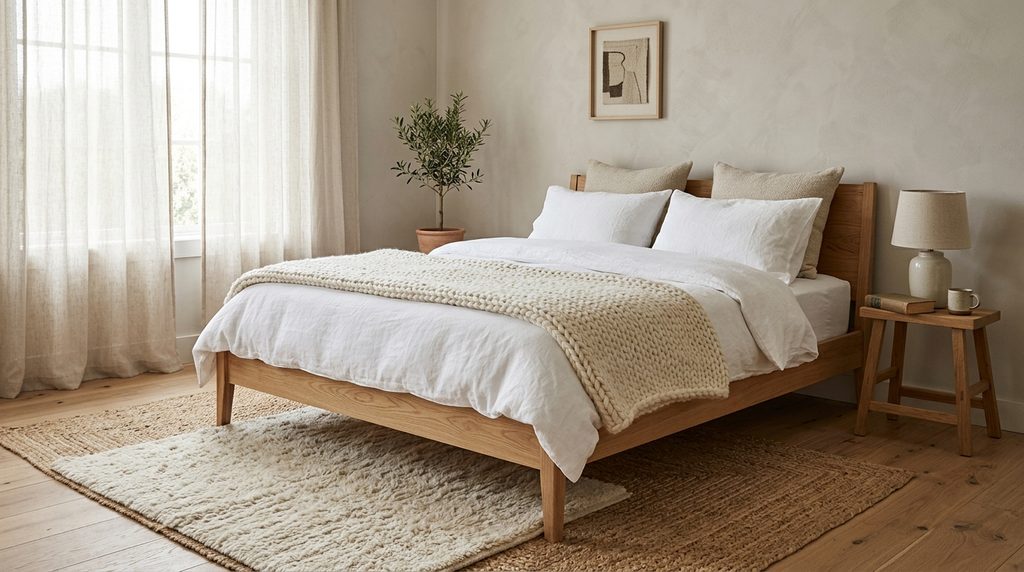
Minimalist bedroom wall art works best as one considered piece rather than a small collection of decorative objects competing for attention.
- A single, larger piece of art gives the eye somewhere to rest, rather than scattering focus around the room
- Choose art with warm tones or visible texture over stark black-and-white graphics, which can read as cold
- The same principle applies to furniture — one well-chosen chair beats several smaller, forgettable pieces
I used to fill empty wall space with three or four small frames because I thought bare walls meant unfinished. One larger, warmer piece replaced all of them and looked far more intentional.
4. Use Warm, Layered Lighting Instead of One Bright Source
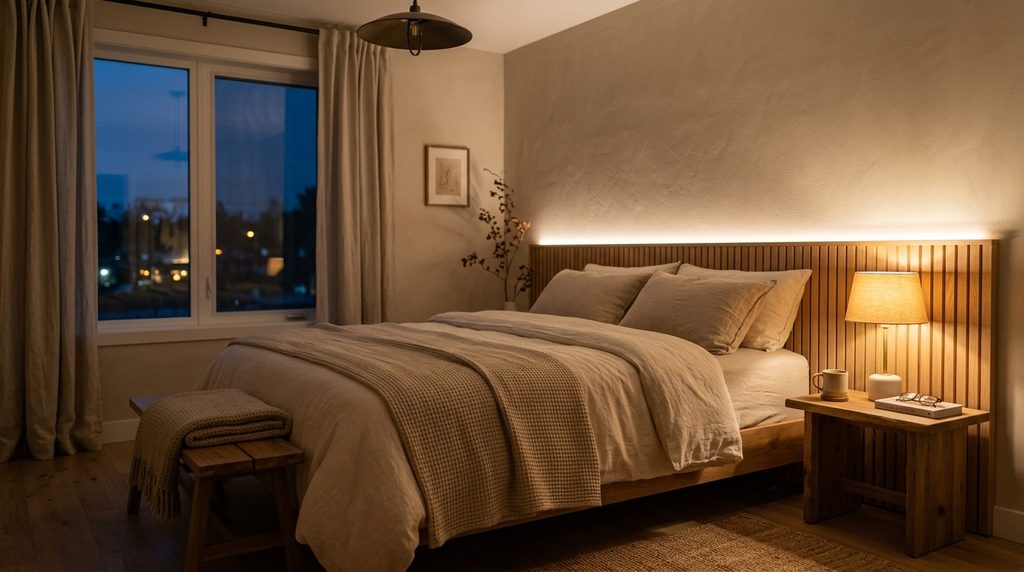
Minimalist bedroom lighting needs the same layering approach as any other room — a single overhead light flattens the space and undoes all the warmth built into the color and texture choices.
- Soft lighting tucked behind or beside the headboard adds warmth without adding visual clutter
- Warm-toned bulbs (2700K–3000K) keep a minimal room from tipping into stark or clinical
- A single bedside lamp does more for the room’s mood in the evening than any overhead fixture
Adding one small lamp beside the bed changed how the entire room felt at night — the same walls, the same furniture, just warmer light doing the work.
5. Bring in Natural Wood for Grounding Warmth
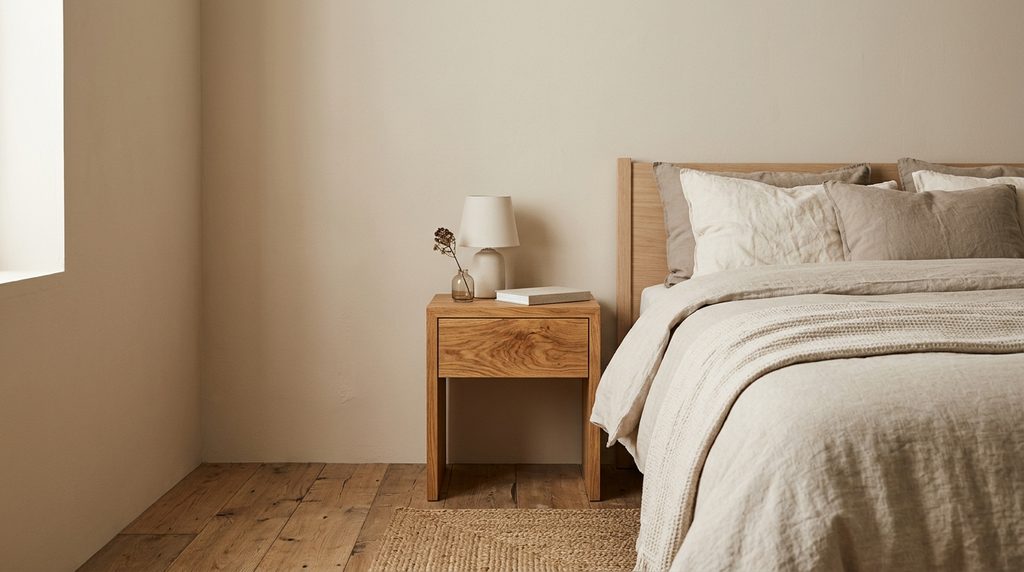
Minimalist bedroom wood tones ground a room in a way that pure neutrals alone can’t — the material honesty of real wood grain adds warmth without adding pattern or color.
- A wood headboard or nightstand introduces texture that photographs and feels warmer than painted surfaces
- Use wood as an accent rather than the dominant material — balance matters more than quantity here
- Real materials, not wood-look laminate, are part of why this trend has lasting appeal rather than feeling temporary
Swapping a painted white nightstand for a simple wood one added more warmth to the corner of my room than any decorative object I tried afterward.
6. Keep the Floor Open to Create Breathing Room
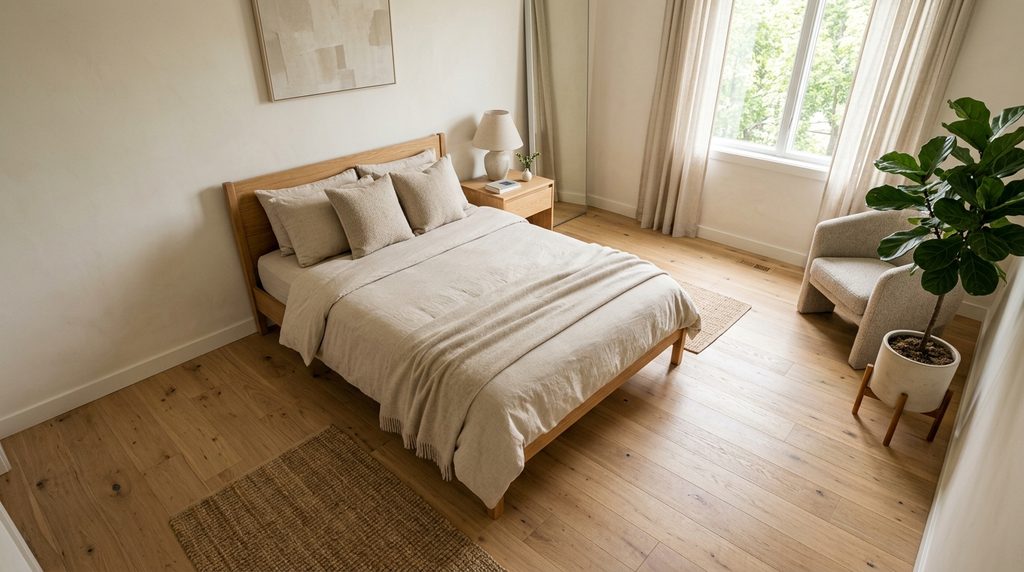
Minimalist bedroom layout depends on open floor space as much as it depends on what’s on the walls — a room with too much furniture crowded together reads as cluttered no matter how neutral the palette is.
- Leave visible gaps between furniture pieces rather than pushing everything against the walls
- A compact, closer arrangement can feel intimate, but avoid unnecessary empty gaps that feel accidental rather than intentional
- Small bedrooms benefit the most from this — open floor space makes a tight room feel calmer, not cramped
Curious how this plays out in a genuinely small footprint? Our Small Bedroom Aesthetic guide has more layout-specific advice for compact spaces.
7. Choose Furniture That Serves More Than One Purpose
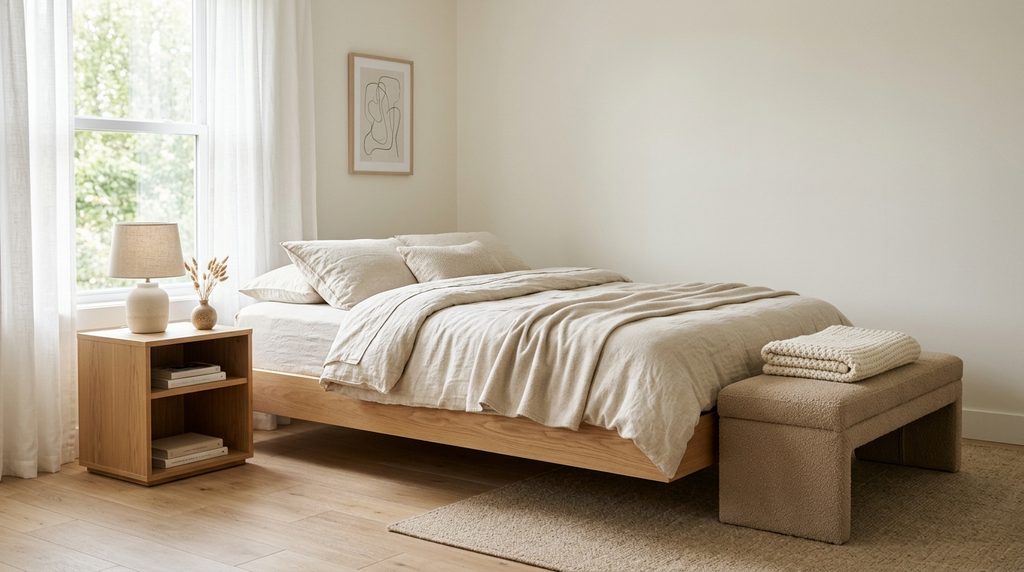
Minimalist bedroom furniture earns its place in the room by doing more than one job — a nightstand with storage, a bench that also holds folded throws, an ottoman that doubles as extra seating.
- Multi-purpose pieces reduce the total number of items in the room without sacrificing function
- A floating platform bed frame lightens the visual weight of the whole room compared to a bulky frame
- Before adding any new piece, ask whether an existing one could take on the same job first
If you’re setting up a bedroom for two, our Modern Bedroom Ideas for Couples guide covers how to apply this same principle when you’re working with double the furniture needs.
8. Add One Plant for Life Without Adding Clutter
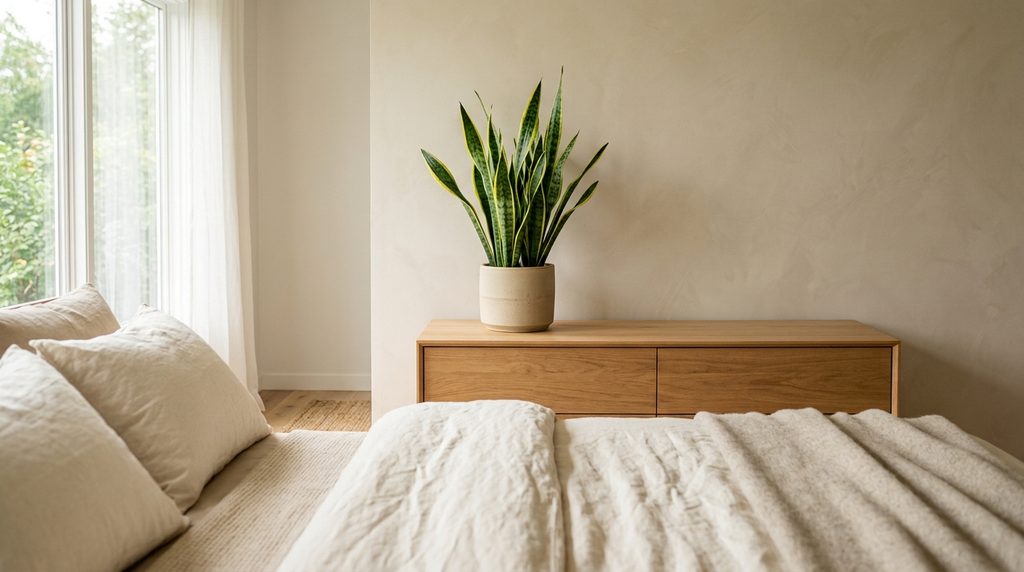
Minimalist bedroom plants soften a neutral palette and add a sense of life to the room without breaking the restrained, intentional feel the style depends on.
- One larger plant does more visually than several small ones scattered around the room
- Low-maintenance options like a snake plant or ZZ plant fit a minimal lifestyle without demanding much upkeep
- Place it somewhere it’s actually visible from the bed, not tucked into a corner you rarely look at
One plant on my dresser did more to make the room feel alive than any of the small decorative objects I’d tried and eventually removed.
9. Mistakes That Make Minimalist Bedrooms Feel Cold
Most minimalist bedroom mistakes come from treating “less” as the entire goal instead of a filter for choosing what actually earns its place in the room.
- Removing everything without adding warmth back through texture, wood, or lighting
- Using stark, cool white on every surface instead of warmer, softer neutral tones
- Relying on a single overhead light instead of layering in warm, softer sources
- Choosing flat, single-texture bedding and rugs instead of mixing materials
- Leaving walls completely bare instead of choosing one considered piece of art
Nearly every one of these mistakes comes from the same misunderstanding — that minimalism means subtraction only, when it actually means being selective about what gets added back.
10. Pro Tips to Build This Look Gradually
Minimalist bedroom tips work best implemented slowly — this isn’t a style that benefits from buying everything at once.
- Start with color and lighting before buying any new furniture — they’re the cheapest, highest-impact changes
- Declutter first, then wait a few days before deciding what to add back — it’s easier to see what’s genuinely missing
- Add texture through bedding and a rug before considering new furniture pieces
- Choose one statement piece — art, a chair, a headboard — rather than several smaller additions
- Reassess after living with the space for a couple of weeks; what felt sufficient on day one sometimes needs one more layer
According to Read TheCoolist’s 2026 Minimalist Bedroom Report →, the best-performing minimalist bedrooms in 2026 are the ones built around intention rather than emptiness — every texture, lamp, and color choice earning its place rather than simply being left out.
Final Thoughts
Minimalist bedroom decor ideas work best when you stop thinking of minimalism as a rule about how little you can have, and start thinking of it as a filter for what actually deserves space in the room. Warm neutrals, real texture, and one or two meaningful pieces do more than an empty room ever could. Build it slowly, and the calm follows without the coldness.
Not sure where your room needs more warmth? Feel free to reach out — I’m always happy to help you figure it out.
Frequently Asked Questions
Why does my minimalist bedroom feel empty instead of calm?
This usually happens when things are removed without adding warmth back. Layering texture, warm lighting, and one or two meaningful pieces solves this without breaking the minimal look.
What colors work best for a minimalist bedroom?
Warm neutrals like oatmeal, taupe, soft sand, and muted terracotta work best. Stark white can feel cold and clinical compared to these warmer tones.
Can a minimalist bedroom still feel cozy?
Yes. Layered texture — mixing linen, wool, and wood — combined with warm lighting is what makes a minimalist bedroom feel cozy rather than sparse.
Does minimalist decor work in a small bedroom?
Yes, and it often works especially well in small spaces, since removing visual clutter and keeping the floor open makes a tight room feel calmer and larger rather than cramped.
How much decor should a minimalist bedroom have?
Enough to feel intentional, not so much that it feels cluttered. One meaningful piece of art, a textured throw, a plant, and warm lighting are usually enough to avoid the room feeling bare.