
Quick Summary
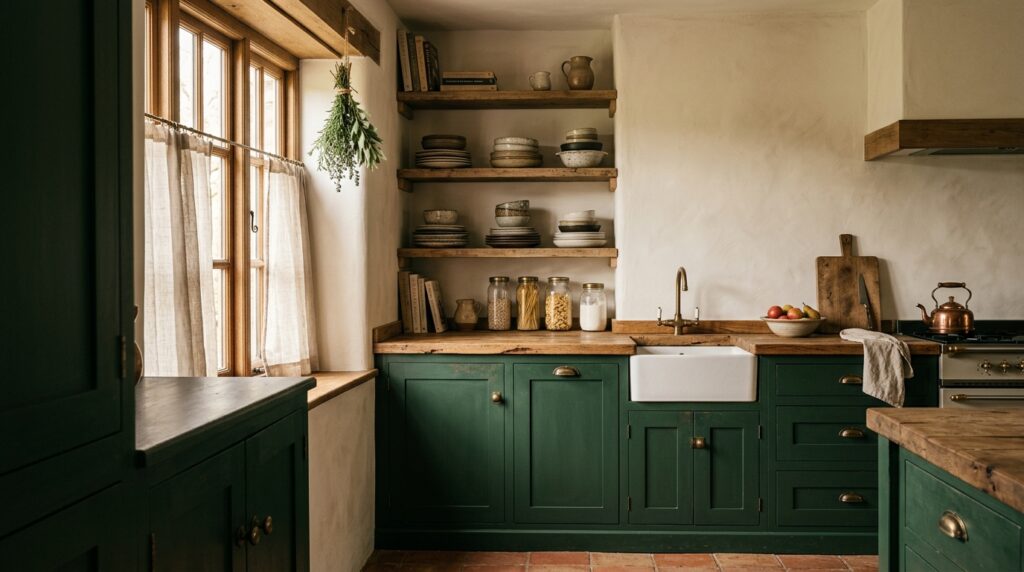
A dark cottagecore kitchen combines deep, moody colors like charcoal and forest green with vintage brass hardware, natural wood, and handmade touches. The key to keeping it feeling open rather than heavy is layered warm lighting and a few lighter accents like cream countertops.
Dark cottagecore kitchen searches have surged over 900% on Pinterest this year, making it one of the fastest-growing kitchen aesthetics of 2026. If you’ve been scrolling through moody, vintage-filled kitchens lately and felt genuinely drawn in, you’re part of a very real shift away from bright, sterile spaces toward something with more soul.
This guide walks through exactly how to bring that look into your own kitchen — the colors, textures, lighting, and vintage details that make dark cottagecore feel cozy rather than cave-like, plus the mistakes that can make it go wrong.
If bold color is more your focus than the overall aesthetic, check out our Aubergine Kitchen Ideas guide for a deep dive on the trending purple kitchen look.
At a Glance
- Dark cottagecore leans into charcoal, forest green, and burgundy rather than stark black
- Warm brass or antique hardware is essential — cool chrome breaks the mood
- Layered lighting keeps a dark kitchen from feeling closed in or dim
- Vintage and thrifted pieces do more for the look than anything bought new
- A few lighter surfaces, like a cream countertop, prevent the space from feeling heavy
Table of Contents
1. What Defines the Dark Cottagecore Kitchen Aesthetic
2. Choose Deep, Moody Colors Without Going Fully Black
3. Pair Dark Cabinets With Warm Vintage Hardware
4. Keep the Room Open With Layered Lighting
5. Balance Dark Cabinets With a Lighter Countertop
6. Style Open Shelving With Curated Vintage Pieces
7. Bring in Natural Wood for Texture and Warmth
8. Add Greenery and Botanical Touches for Life
9. Mistakes That Make a Dark Cottagecore Kitchen Feel Heavy
10. Pro Tips to Build the Look Without a Full Renovation
Comparison Table: Dark Cottagecore vs. Traditional Cottagecore
Final Thoughts on Dark Cottagecore Kitchens
Frequently Asked Questions
1. What Defines the Dark Cottagecore Kitchen Aesthetic
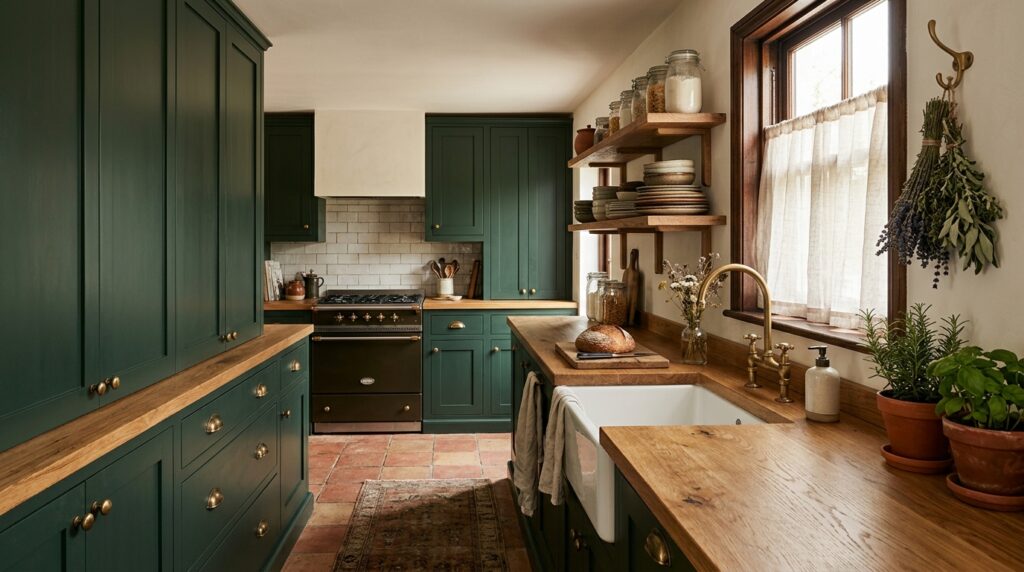
A dark cottagecore kitchen takes the nostalgic, handmade charm of traditional cottagecore and layers it with deep, moody color instead of the usual soft pastels. It’s cottagecore with a little more mystery.
- Traditional cottagecore leans bright and airy; dark cottagecore adds sophistication through deeper tones like forest green, charcoal, and burgundy
- It still centers on nature and rural-inspired living, just filtered through a moodier, more atmospheric lens
- Design writers describe it as timeless rather than trendy, since it draws on vintage and antique influences rather than anything fast-fashion
I’ll admit I assumed “dark kitchen” automatically meant “modern and cold” — this style completely upended that assumption for me. It’s warm in a way that surprised me.
2. Choose Deep, Moody Colors Without Going Fully Black
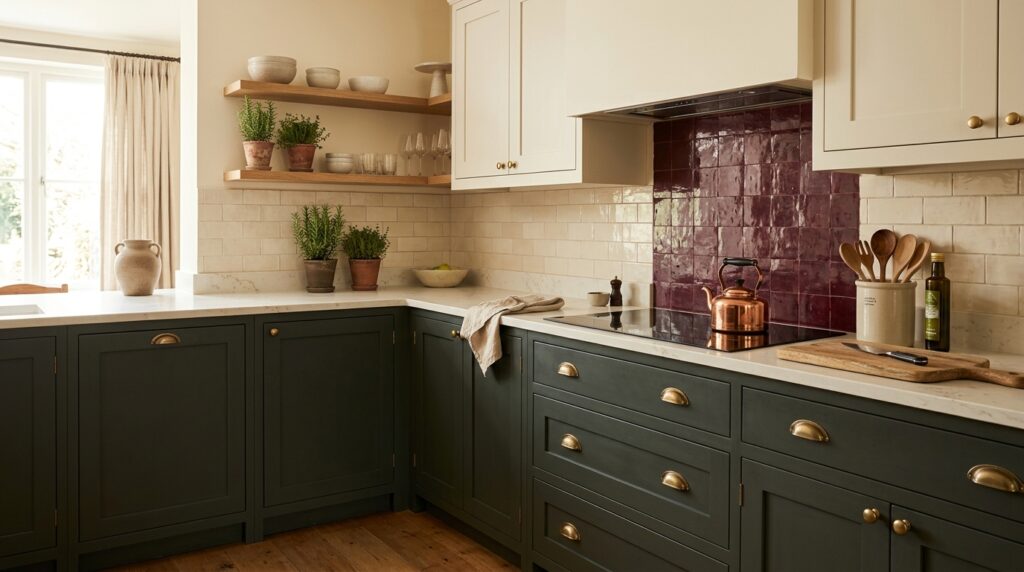
Dark cottagecore kitchen colors work best when they stay grounded in nature rather than going stark or industrial. Think deep forest green and charcoal rather than pure black.
- Forest green, charcoal gray, and rich burgundy are the core palette for this aesthetic
- A matte or eggshell finish absorbs light gently, while high-gloss dark paint reflects it in harsh streaks that feel more modern than cottagecore
- Reserve the darkest tone for lower cabinets or an accent wall, keeping upper areas lighter to prevent the room from closing in
The finish matters almost as much as the color itself — a glossy dark cabinet reads sleek and contemporary, while the same color in matte instantly feels handcrafted and lived-in. For more on testing dark paint shades before committing, One Home Therapy has useful guidance on how lighting changes a color’s appearance throughout the day.
3. Pair Dark Cabinets With Warm Vintage Hardware
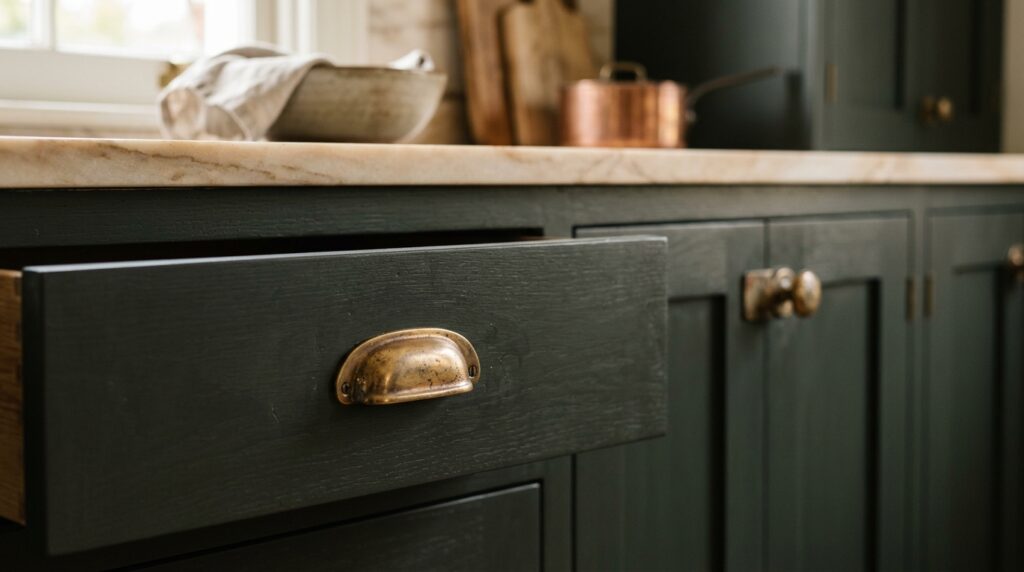
Dark cottagecore kitchen hardware should lean warm and slightly aged — unlacquered or antique brass works far better than anything polished or chrome-finished.
- Unlacquered brass develops character and patina over time, which fits the “collected over years” feeling cottagecore celebrates
- Avoid shiny chrome or polished nickel — these read cold and modern against deep, moody cabinet colors
- Mixing slightly mismatched vintage-style pulls, rather than a uniform matching set, adds to the collected-over-time feeling
Hardware feels like a small detail until you see the difference in person — swapping cold silver for warm brass changes the entire mood of a dark cabinet almost instantly.
4. Keep the Room Open With Layered Lighting
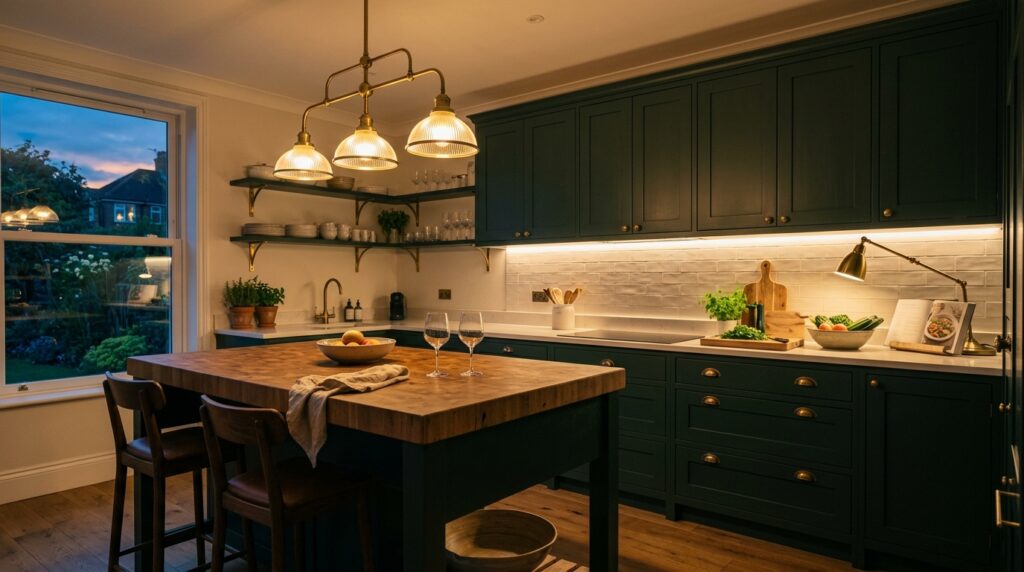
Dark cottagecore kitchen lighting is what separates a cozy moody kitchen from one that just feels dim. Relying on a single overhead fixture is the fastest way to make dark cabinets feel oppressive.
- Layer ambient, task, and accent lighting rather than depending on one ceiling fixture
- Under-cabinet lighting illuminates countertops while adding a warm glow that bounces off dark surfaces
- A statement pendant or vintage-inspired chandelier adds drama while still functioning as real, usable light
Dimmer switches are worth the small investment here — being able to shift from bright task lighting while cooking to a soft evening glow makes the whole space feel intentional rather than one-note.
5. Balance Dark Cabinets With a Lighter Countertop
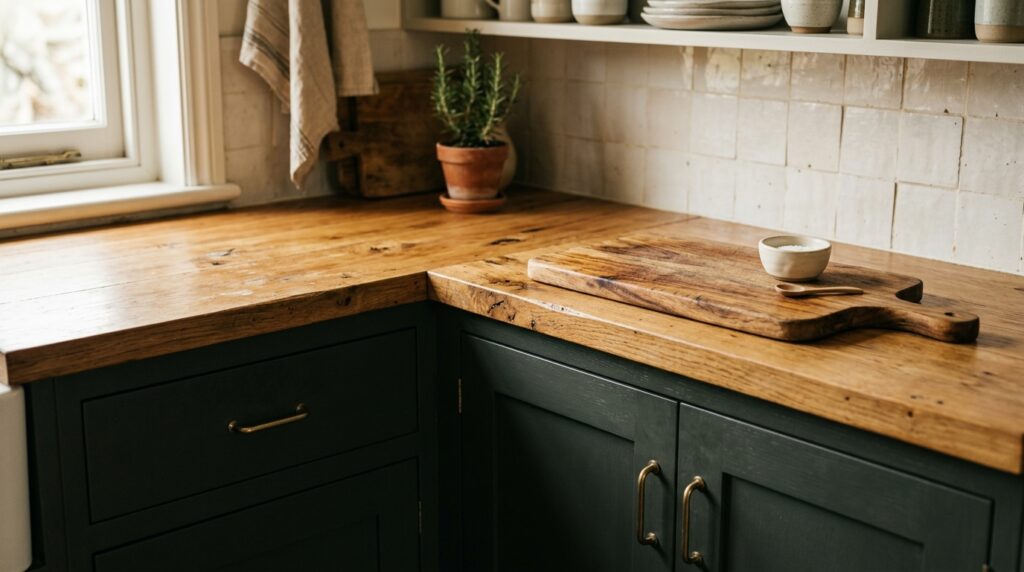
Dark cottagecore countertop pairing matters for the same reason contrast matters everywhere else in this aesthetic — without it, a kitchen can tip from moody into heavy.
- Warm wood countertops in honey or walnut tones add natural texture that complements dark cabinetry beautifully
- Soapstone is popular in this style because it develops a soft patina with age, echoing the “collected over time” feeling
- Cream or off-white countertops work too, offering a cleaner contrast if you want the kitchen to feel a bit brighter overall
Wood countertops in particular earn their keep here — small stains and knife marks that would bother you in a modern kitchen actually add to the charm in this style.
6. Style Open Shelving With Curated Vintage Pieces
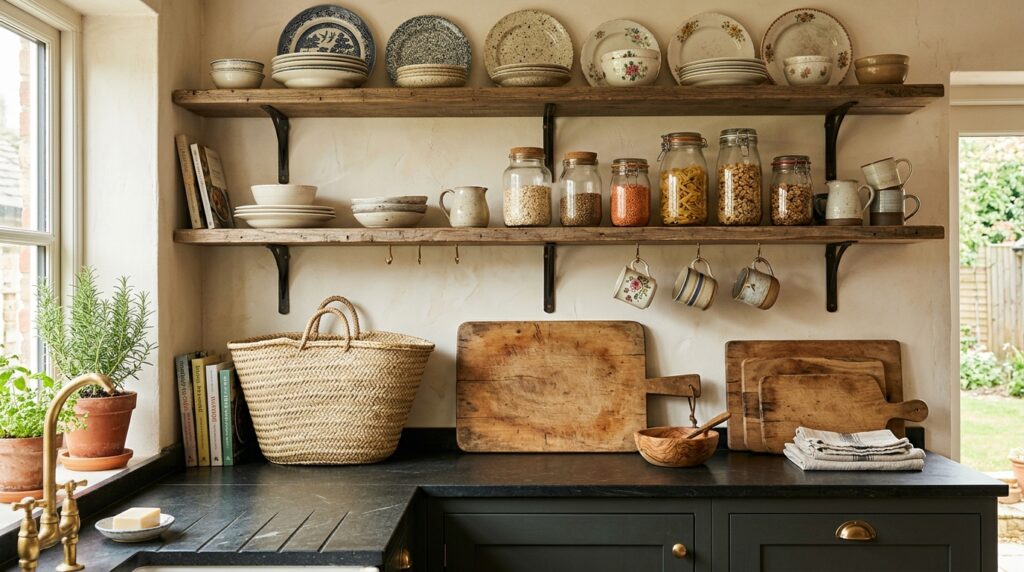
Dark cottagecore kitchen shelving works best styled with pieces you actually use, not purely decorative filler. This is where the “lived-in” feeling of the aesthetic really comes through.
- Stacked plates, vintage mugs, and glass jars all contribute to the look while staying functional
- Thrift stores and flea markets are genuinely the best source for this aesthetic — new items rarely have the same character
- Wooden cutting boards and woven baskets add texture that breaks up the smoothness of painted cabinetry
The pieces that get the most compliments in my own kitchen are almost always the secondhand finds, not anything bought new — that history is hard to fake.
7. Bring in Natural Wood for Texture and Warmth
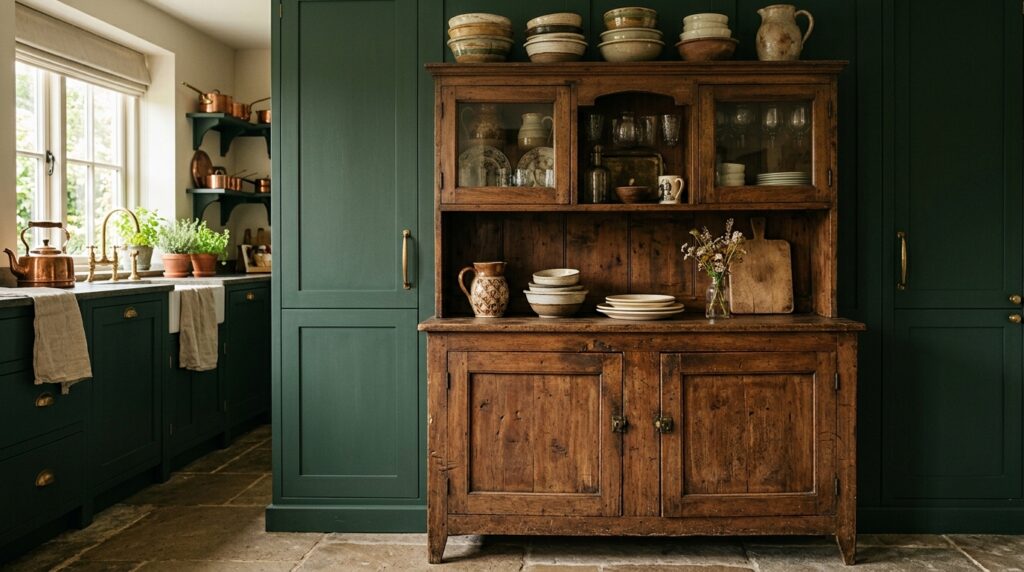
Dark cottagecore kitchen wood tones are what keep the space from feeling flat or one-dimensional against all that deep color.
- A wooden sideboard or hutch adds grounding storage without committing to a full cabinet repaint
- Open wood shelving contrasts nicely against dark lower cabinets, giving the eye somewhere to rest
- Slight imperfections in vintage wood furniture — dents, uneven staining — actually enhance the aesthetic rather than detract from it
An antique wood piece does more visual work in this style than almost any new furniture piece could, simply because it already carries the character this look is built around.
8. Add Greenery and Botanical Touches for Life
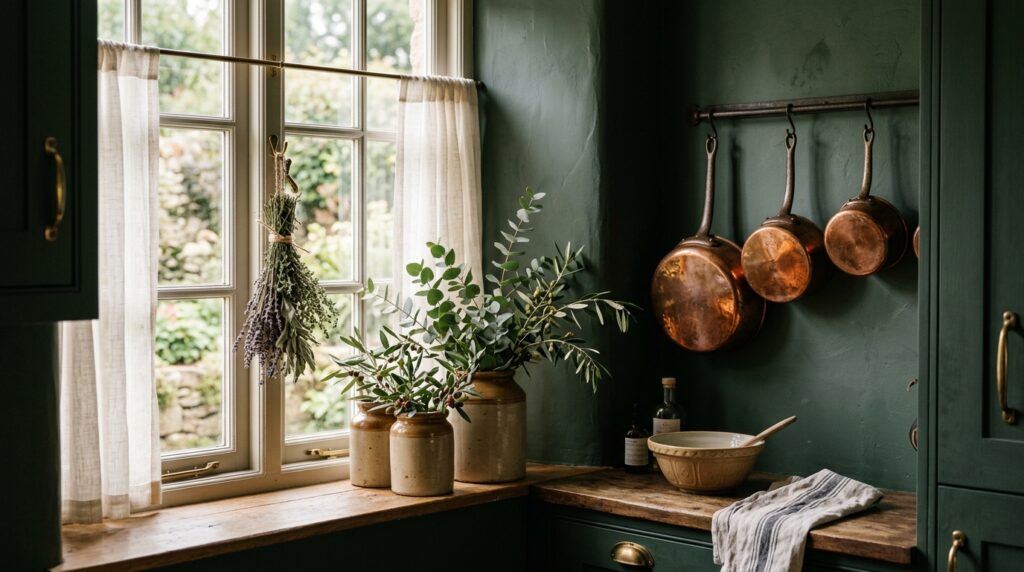
Dark cottagecore kitchen plants soften the moodiness of deep cabinet colors and tie the space back to nature, which is core to the whole aesthetic.
- Fresh herbs, eucalyptus, or olive branches in aged pottery or stoneware crocks feel effortlessly rustic
- Dried botanicals work well too, and don’t require the upkeep fresh greenery does
- Copper cookware displayed openly adds a warm metallic glow that reflects light around dark surfaces
A simple bundle of dried herbs hanging near a window did more to soften my test space than any decorative object I tried — it felt instantly more like a real, lived-in kitchen.
9. Mistakes That Make a Dark Cottagecore Kitchen Feel Heavy
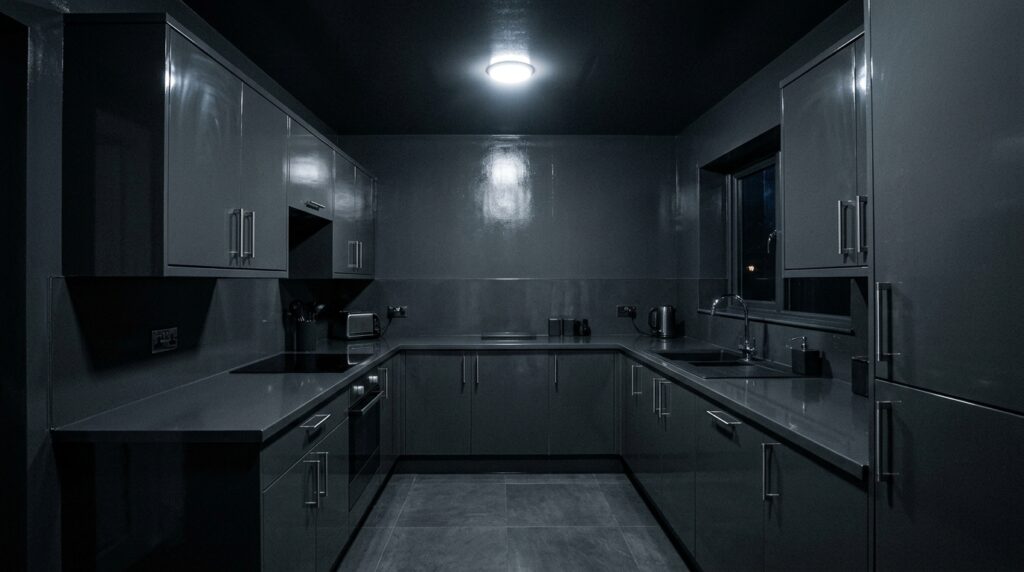
Most dark cottagecore kitchen mistakes come from leaning too hard into “dark” and not hard enough into “cottage” — the balance is what makes this style work.
- Painting every surface the same dark tone with no lighter countertop, wall, or shelving to break it up
- Using cool-toned or shiny hardware, which clashes with the vintage warmth this style depends on
- Relying on a single overhead light instead of layering multiple warm light sources
- Choosing high-gloss paint, which reflects light harshly instead of absorbing it gently like a matte finish
- Buying everything new instead of mixing in secondhand or vintage pieces, which strips away the “collected over time” character
Almost every one of these mistakes comes down to skipping contrast — whether that’s color, texture, or light source, variety is what keeps the look from tipping into heaviness.
10. Pro Tips to Build the Look Without a Full Renovation
Dark cottagecore kitchen tips don’t require repainting every cabinet or replacing your countertops — several of the most impactful changes are small and reversible.
- Start with a single dark accent piece, like a sideboard or hutch, rather than committing to a full repaint
- Swap hardware first — it’s inexpensive and instantly shifts the mood of existing cabinets
- Add warm-toned bulbs to existing fixtures before investing in new lighting altogether
- Shop secondhand for dishes, cutting boards, and decor before buying anything new
- Let the space evolve slowly — cottagecore is meant to feel collected over time, not finished in a single weekend
The style genuinely rewards patience here. A kitchen that comes together piece by piece over a few months tends to look more authentic than one assembled all at once.
Comparison Table: Dark Cottagecore vs. Traditional Cottagecore
Not sure which direction fits your space? Here’s how dark cottagecore kitchen ideas compare to the traditional, lighter version of the aesthetic.
| Element | Traditional Cottagecore | Dark Cottagecore |
|---|---|---|
| Color Palette | Soft pastels, whites | Forest green, charcoal, burgundy |
| Hardware | Brushed brass, ceramic | Unlacquered or antique brass |
| Mood | Light, whimsical, airy | Moody, atmospheric, grounded |
Final Thoughts on Dark Cottagecore Kitchens
Dark cottagecore kitchen ideas work best when the moodiness is balanced with warmth — layered lighting, natural wood, and a few vintage finds do more to make the look feel authentic than any single big renovation. Start small, let the space evolve, and lean into pieces with real history rather than anything mass-produced.
Frequently Asked Questions
What colors are used in a dark cottagecore kitchen?
Deep forest green, charcoal gray, and rich burgundy are the core colors, often paired with warm wood tones and antique brass hardware rather than pure black or cool grays.
Will a dark cottagecore kitchen make a small space feel smaller?
Not if it’s layered correctly. Using a matte finish, layering warm lighting, and keeping the countertop or upper cabinets lighter helps a dark kitchen feel open rather than cramped, even in smaller spaces.
Do I need to repaint my whole kitchen to get this look?
No. Starting with a single dark furniture piece, swapping hardware, or adding warm-toned lighting can bring the dark cottagecore aesthetic into a kitchen without a full renovation.
What’s the difference between dark cottagecore and regular cottagecore?
Traditional cottagecore leans toward light, pastel colors and a whimsical feel, while dark cottagecore uses deeper, moodier tones like forest green and charcoal while keeping the same nostalgic, handmade details.
Is dark cottagecore a passing trend?
Design writers describe it as more timeless than trend-driven, since it draws on vintage and antique influences that have staying power rather than fast-changing seasonal styles.
Pingback: Halloween Kitchen Decor: 31 Bewitching Ideas You'll Love