
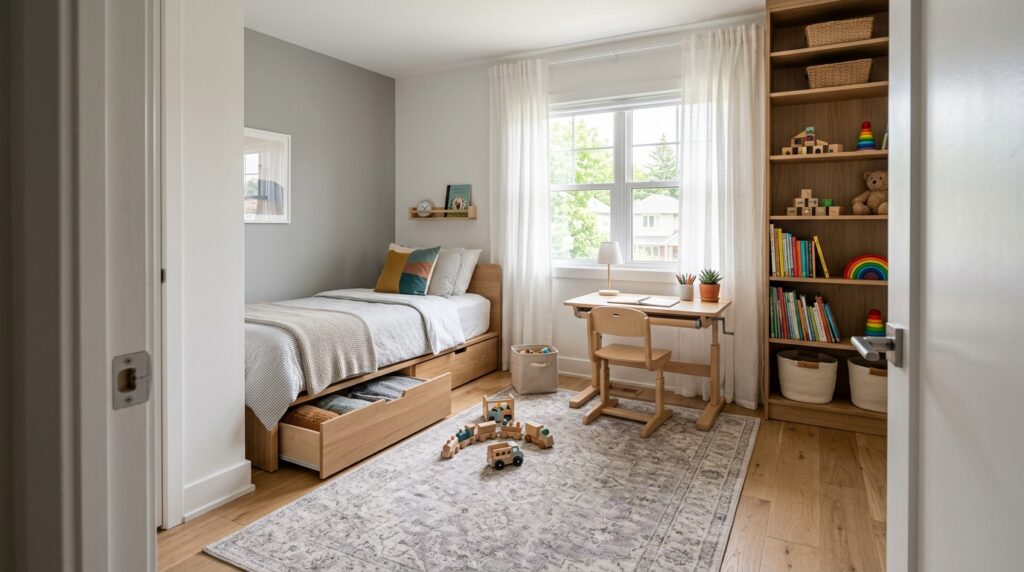
Every parent has scrolled through a hundred themed kids bedroom photos — dinosaurs, rockets, princess castles — and felt the pull to go all in. I did too, once. Then I watched that excitement fade in about eight months.
This guide skips the theme-first approach entirely. Instead, it focuses on what actually keeps a kids bedroom working for years: function, flexible style, and furniture that grows instead of getting replaced.
📖 Table of Contents
- 1. Why Themed Rooms Stop Working Fast
- 2. Design for Function First, Decor Second
- 3. Choosing a Flexible Color Palette
- 4. Smart Storage That Grows With Them
- 5. Budget-Friendly Styling Tips
- 6. Furniture That Adapts as They Age
- 7. Common Mistakes Parents Make
- 8. How to Plan the Room Step-by-Step
- 9. Themed vs. Flexible Room Comparison
- 10. Frequently Asked Questions
- 11. Final Thoughts
1. Why Themed Rooms Stop Working Fast
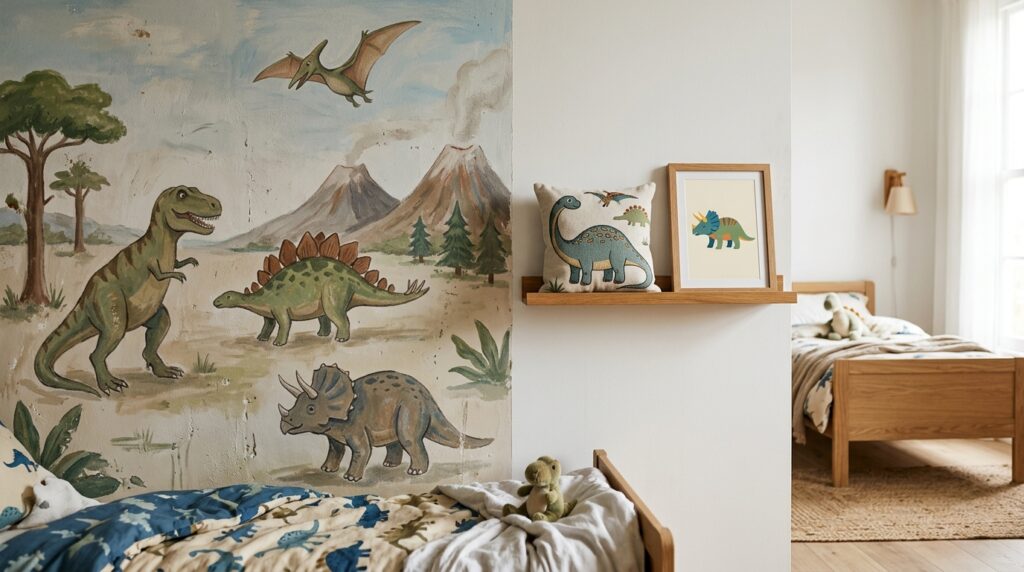
Most kids bedroom themes are tied to a specific age or interest, which means they have a built-in expiration date — often much sooner than parents expect.
A dinosaur mural feels perfect at age 4 and slightly embarrassing by age 8. Repainting, replacing bedding, and swapping decor every couple of years adds up fast in both cost and effort.
2. Design for Function First, Decor Second
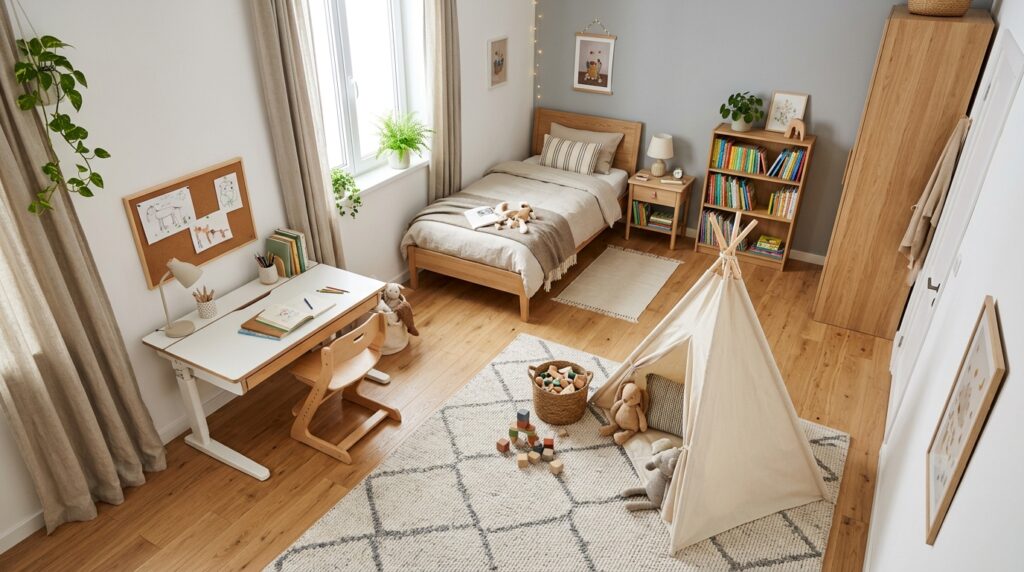
A truly functional kids bedroom starts with how the space is actually used — sleeping, homework, play, and storage — before a single decor decision gets made.
- Map out the room’s real zones first: sleep area, play area, and a study spot if there’s room.
- Leave open floor space for play — cluttered rooms limit what a child can actually do in them.
- Choose furniture placement based on traffic flow, not just what looks balanced in a photo.
Once the layout supports daily life, decor becomes the easy part — because it’s filling gaps in a room that already works.
3. Choosing a Flexible Color Palette
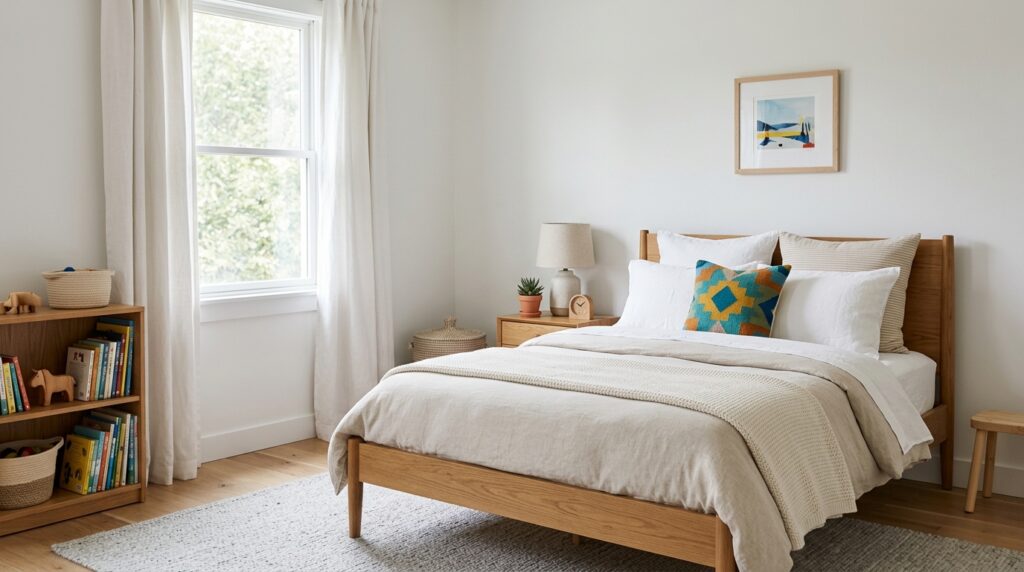
The right kids bedroom colors should feel personal without locking the room into one specific stage of childhood.
Neutral bases — white, soft grey, warm wood tones — paired with one or two accent colors give a room personality that can shift as your child’s taste changes, without repainting walls.
If you like the idea of a soft, nature-inspired accent instead of a loud theme, our mushroom bedroom decor guide shows how to add a whimsical touch without it looking childish.
Explore More Ideas4. Smart Storage That Grows With Them
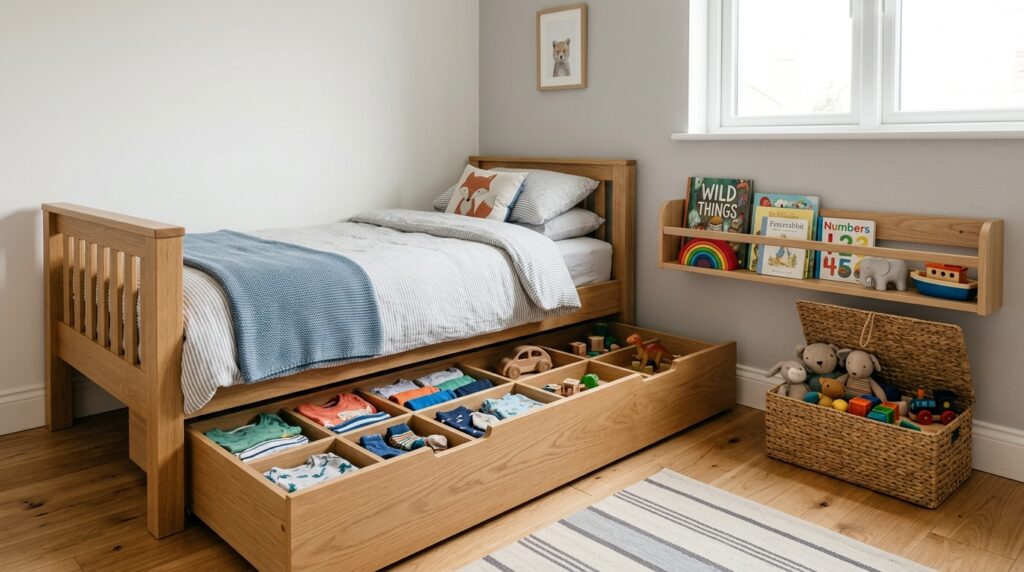
Good kids bedroom storage ideas solve the one problem every parent deals with daily — clutter — without needing a full room redesign.
- Under-bed drawers handle seasonal clothes and toys without taking up extra floor space.
- Open bins are easier for young kids to use independently than closed drawers with labels.
- Wall-mounted shelves keep books and small items visible and off the floor.
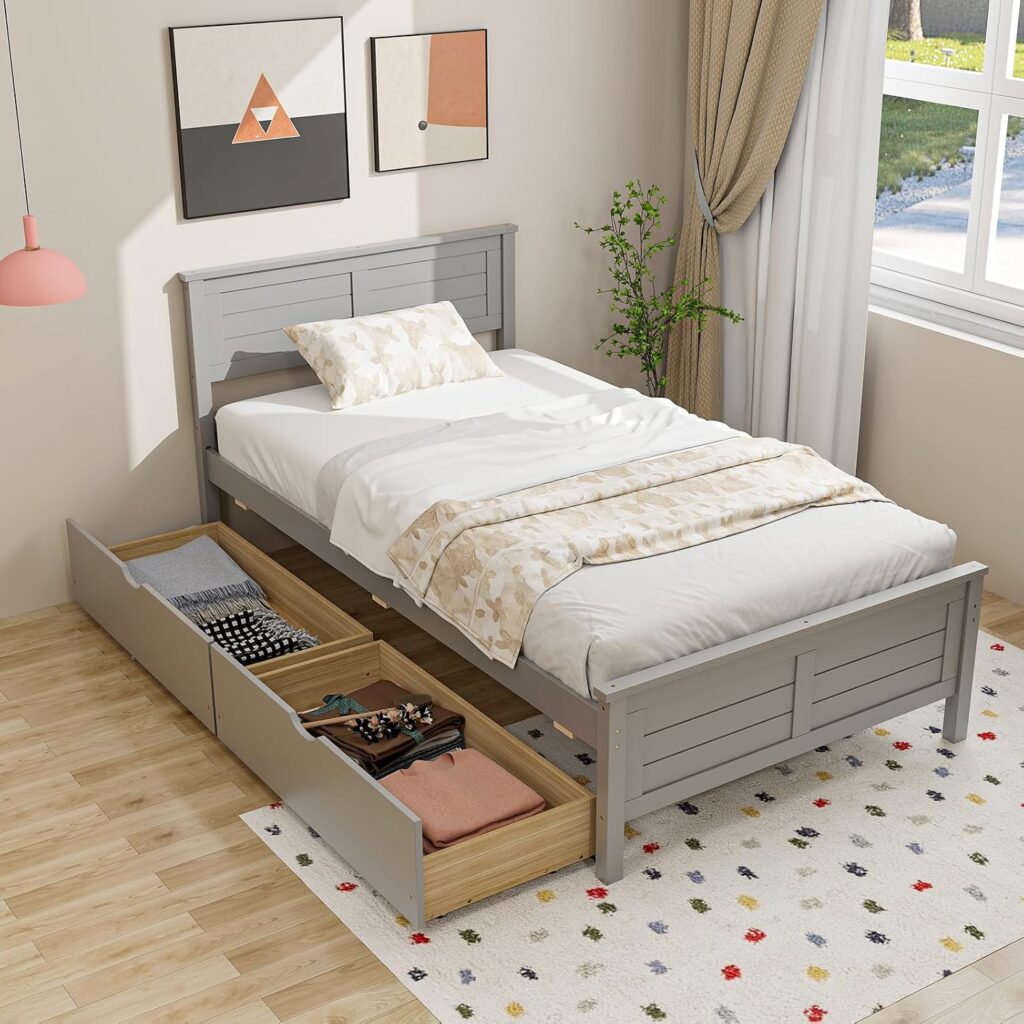
Recommended: A simple solid pine wood bed frame like this one skips decorative extras entirely. The plain slat headboard, neutral wood finish, and 2 flexible storage drawers mean it won’t feel dated or overly themed in a couple of years — and it holds up to 350 lbs with zero squeaking.
5. Budget-Friendly Styling Tips
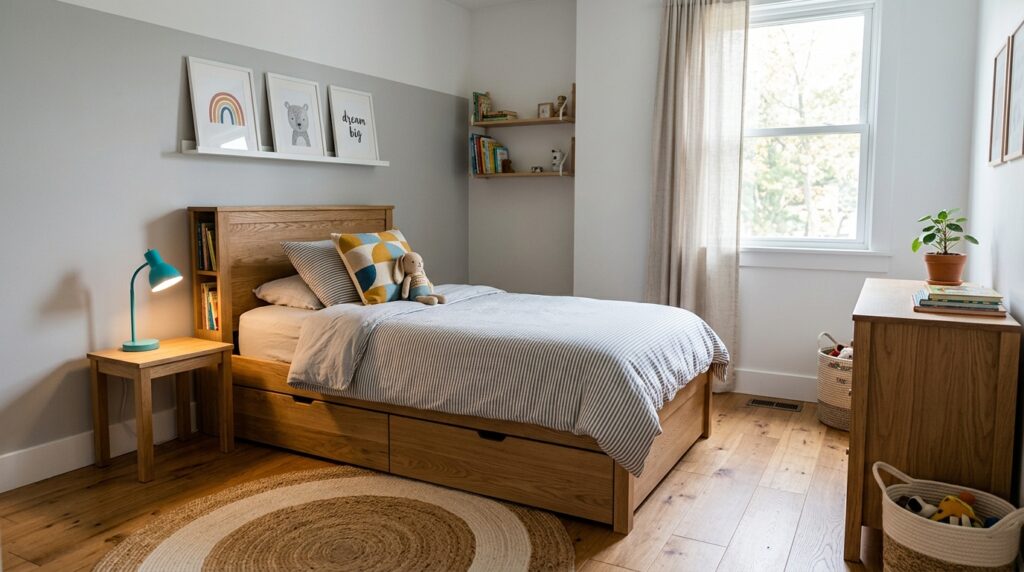
A budget kids bedroom decor approach doesn’t mean the room looks unfinished — it means spending on the pieces that actually matter and skipping the rest.
- Splurge on the bed and storage — the pieces used daily and hardest to replace often.
- Save on decor — wall art, rugs, and accent pillows are easy and cheap to swap later.
- Let your child pick one or two small items themselves, like a lamp or a pillow, instead of the whole room’s direction.
6. Furniture That Adapts as They Age
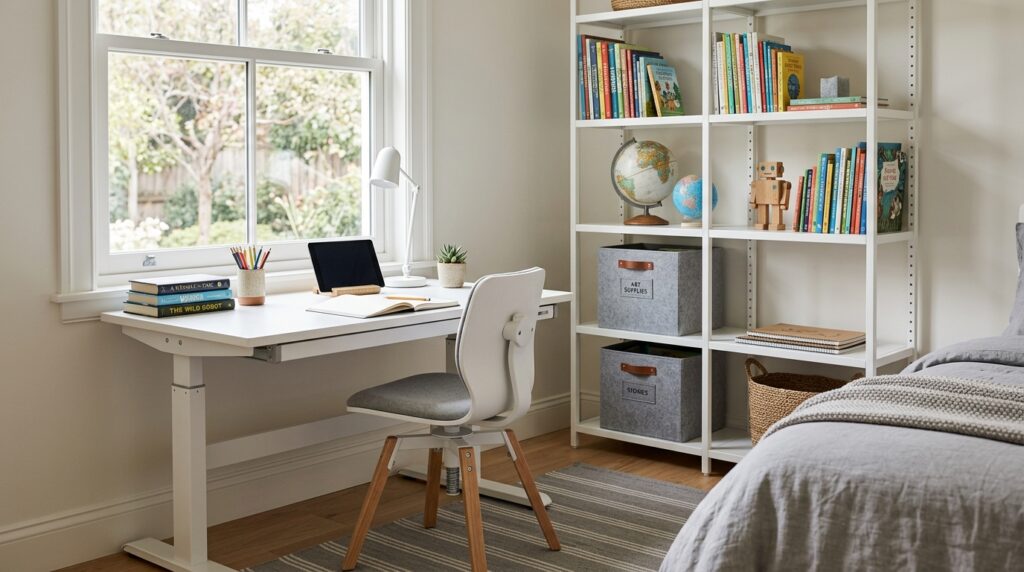
The best kids bedroom furniture is built to adjust as your child grows, instead of needing to be replaced every stage.
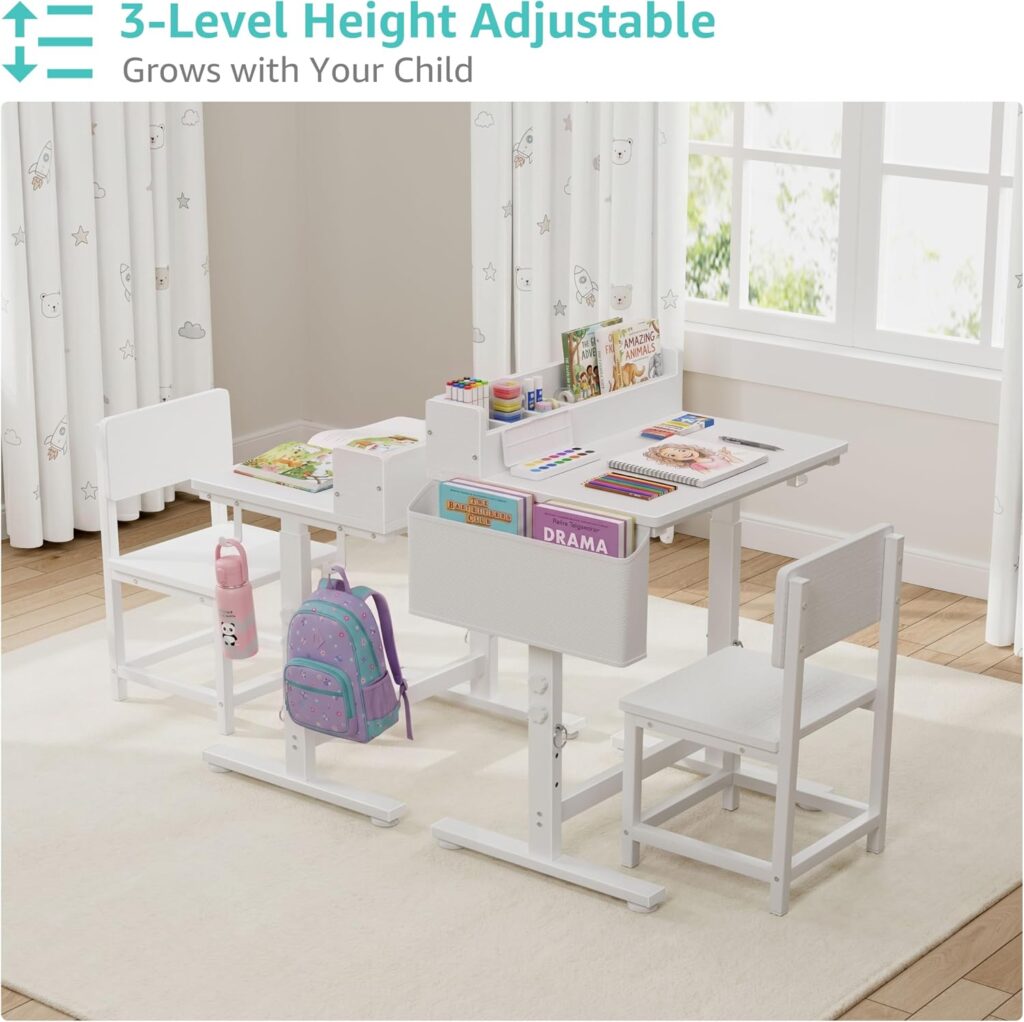
Adjustable desks, chairs, and shelving units that aren’t locked into one age group save money and effort in the long run — and they’re one of the clearest examples of function-first design.
Recommended: A height-adjustable desk and chair set like this one is the clearest example of designing for function over theme. It’s ergonomic, grows with your child from ages 3 to 8, and includes a built-in tabletop organizer plus removable storage bag — so it adapts instead of getting replaced every year or two.
7. Common Mistakes Parents Make
Most kids room decorating mistakes come from designing for the room’s first year instead of its next five.
- Painting walls in a theme-specific mural that’s expensive and time-consuming to undo later.
- Buying character-branded furniture instead of neutral pieces with swappable decor.
- Overfilling the room with decor, leaving no open space for actual play.
- Skipping storage planning until clutter becomes an obvious daily problem.
8. How to Plan the Room Step-by-Step
Learning how to design a kids bedroom that lasts starts with a simple order of operations — not a shopping list.
- Measure the room and mark fixed points — windows, closet doors, outlets.
- Choose a neutral base palette for walls, flooring, and major furniture.
- Pick adaptable furniture — bed, desk, and storage that can grow with your child.
- Add swappable personality — bedding, art, or a rug your child helps choose.
- Leave open floor space for whatever your child’s current interest happens to be.
Working with a smaller room? Our small bedroom cozy luxury guide covers how to layer storage and style without making a compact space feel cramped.
Explore More Ideas9. Themed vs. Flexible Room Comparison
Here’s how a fully themed room stacks up against a flexible, function-first design over time.
| Factor | Themed Room | Flexible Room |
|---|---|---|
| Lifespan | 1-3 years | 5+ years |
| Long-term Cost | Higher (repeated updates) | Lower (one setup) |
| Personality | Strong, but fixed | Adjustable over time |
10. Frequently Asked Questions
Is it bad to theme a kids bedroom?
Not necessarily — themes work best when kept to easily swappable items like bedding or wall art, rather than permanent choices like paint or furniture.
What colors work best for a flexible kids bedroom?
Neutral bases like white, soft grey, or warm wood tones paired with one or two accent colors give the room personality without limiting future changes.
How can I make a kids bedroom feel personal without a theme?
Let your child choose a few small, swappable items — a lamp, pillow, or rug — while keeping furniture and wall color neutral.
What furniture should I invest more in for a kids bedroom?
Invest in the bed and storage furniture first, since these are used daily and are the hardest and most expensive to replace later.
11. Final Thoughts
A kids bedroom doesn’t need a theme to feel special — it needs to actually work for daily life, and that’s what makes it feel loved for years instead of months.
Start with function, keep the palette flexible, and let personality come through in the small, swappable details.
Refreshing more than one room in the house? Our modern bedroom ideas for couples guide is a great next stop for the primary bedroom.
Explore More IdeasWhat’s the one thing you wish you’d known before decorating your kid’s room? Share your answer in the comments below!
Bookmark this page for later, and visit dreamdecordaily.com for more bedroom inspiration.
Pingback: 15 Best Bedroom Rug Ideas That Make Your Room Cozy (2026 Guide) - Dream Decor Daily
Pingback: 20 Pink and Green Bedroom Ideas That Actually Work (2026 Guide)