

Standing in a furniture showroom (or scrolling through fifty browser tabs at midnight) trying to picture how a sofa will actually look in your living room is one of the most common — and most frustrating — parts of decorating a home. It’s easy to fall in love with a piece online, only to have it arrive too big, the wrong shade of gray, or completely wrong for how your family actually uses the room.
This guide walks you through exactly how to choose living room furniture that fits your space, matches your lifestyle, and doesn’t fight your budget. We’ll cover measuring your room, picking a sofa, building a color scheme, choosing a coffee table, adding storage, getting the lighting right, and the mistakes most people make along the way — so you can shop with confidence instead of second-guessing every click.
Table of Contents
This guide starts with measuring your living room and planning your layout, then walks through choosing the right sofa, building a color scheme, selecting a coffee table, and adding storage furniture. From there, we cover lighting tips, mixing styles and materials, setting a realistic budget, and arranging your furniture for good flow. We wrap up with the most common mistakes to avoid, a quick-reference summary, and answers to frequently asked questions.
1. How to Choose Living Room Furniture: Start by Measuring Your Space
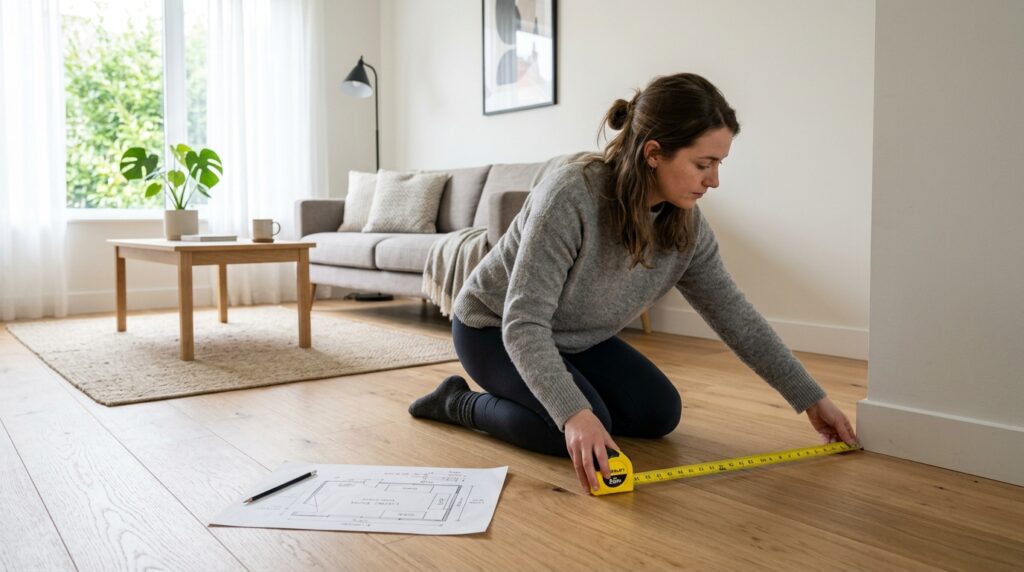
Caption: Measuring your space first prevents the single most common furniture-buying mistake — pieces that don’t fit.
Before you fall in love with any sofa or sectional, grab a tape measure. Furniture that looks perfectly sized in a showroom or on a website photo can feel completely different once it’s sitting in your actual room. Measure the length and width of your living room, note the ceiling height, and mark where doorways, windows, radiators, and outlets sit. Don’t forget to measure your doorways and hallways too — plenty of sofas have been returned simply because they couldn’t make it around a tight corner.
Once you have your dimensions, sketch a rough floor plan on paper (or use a free app). This lets you test a few furniture arrangements before you spend a single rupee or dollar, and it stops you from buying a beautiful sectional that ends up blocking the path to your kitchen.
Quick bullet takeaways:
- Measure the length, width, and ceiling height of the room.
- Note doorway and hallway widths for delivery access.
- Mark the position of outlets, windows, and any fixed features.
- Sketch a floor plan before shopping, even if it’s rough.
Pro Tip: As a general guideline, interior designers recommend leaving at least 30–36 inches of open walking space between major furniture pieces, and no less than 3.5 feet (and no more than 10 feet) between seating pieces for comfortable conversation.
How to implement: Use painter’s tape or old newspaper sheets to outline where your sofa, coffee table, and TV stand will sit directly on your floor. Walk through the space for a day or two — you’ll immediately notice if a path feels too tight.
2. Choose the Right Sofa
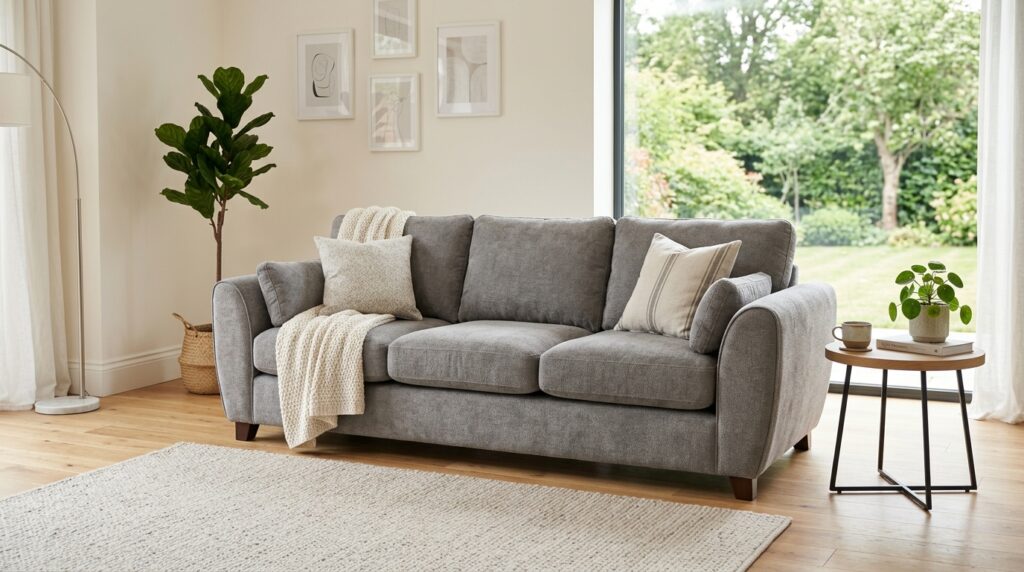
Caption: A neutral, well-proportioned sofa acts as the anchor for the rest of your living room furniture.
Your sofa is the single most important — and most expensive — decision in the room, so it deserves the most thought. Start with size: measure the length of the wall it will sit against, and leave at least a few inches of breathing room on either side. Then think about how you actually use your living room. If you binge-watch shows every weekend, prioritize deep seats and a comfortable recline. If you host often, a 3-seater with clean lines gives you the flexibility to add accent chairs around it.
Fabric matters as much as shape. If you have kids or pets, consider stain-resistant, easy-to-clean upholstery options, such as performance fabric or chenille, rather than delicate silk or unprotected leather, which can crease and show wear more quickly in high-traffic homes.
Quick bullet takeaways:
- Measure the available wall length before choosing the sofa size.
- Match seat depth and firmness to how you actually use the room
- Choose stain-resistant fabric if you have kids or pets.
- Stick to neutral tones for a piece this large — it’s easier to update accent colors than a whole sofa.
| Chenille | High | Families, everyday use, soft texture |
| Leather | Medium-High | Formal spaces, easy wipe-down |
| Linen | Medium | Casual, breathable, light rooms |
| Velvet | Medium | Statement pieces, low-traffic rooms |
Our Pick: GarveeHome 89″ 3-Seater Sofa
A neutral gray chenille sofa with a deep seat, built-in cup holders, and side storage pockets — a practical, comfortable anchor piece for apartments and mid-size living rooms.
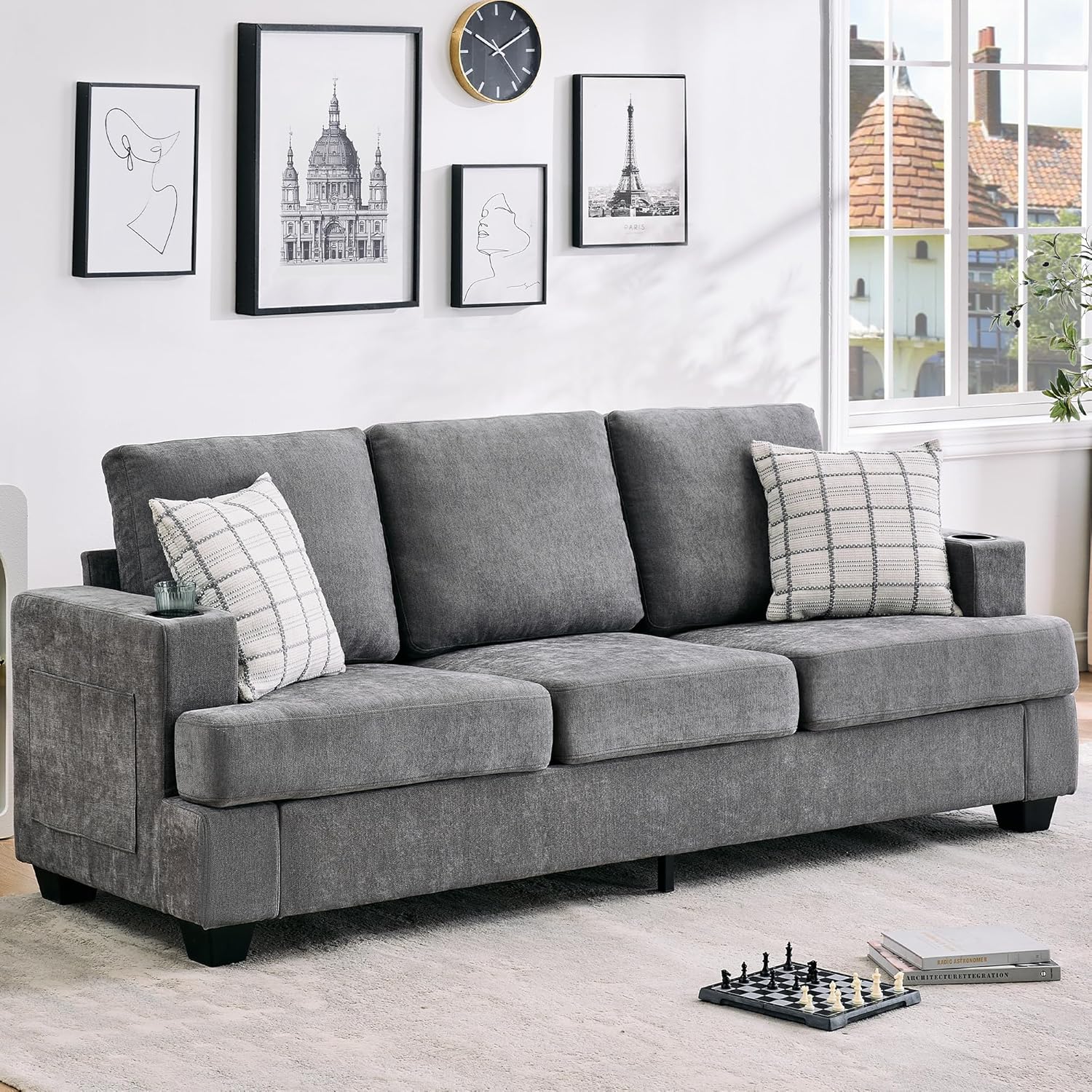
Pro Tip: Sit on any sofa for at least five minutes before buying (in-store or based on trusted reviews) — a sofa that feels fine for a quick sit can feel completely different after an hour of actual use.
How to implement: Before ordering, tape off the sofa’s exact footprint on your floor using its length and depth dimensions from the product listing. Then, check that the walking space around it matches the 30–36 inch guideline above.
3. Pick a Color Scheme
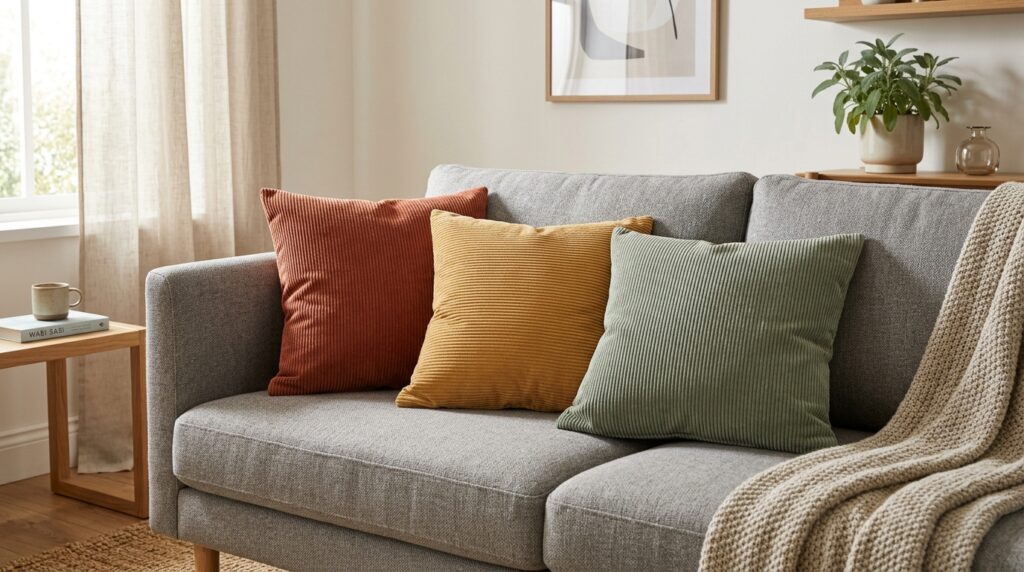
Caption: A neutral base with one or two accent colors keeps a living room flexible and easy to update.
The easiest, most forgiving approach for a living room is to keep large pieces — your sofa, coffee table, TV stand — in neutral tones like gray, beige, or warm wood, then bring in color through things that are cheap and easy to swap: throw pillows, a rug, or artwork. This way, when trends shift, or you simply want a refresh, you’re not stuck replacing an expensive sofa.
If your home already leans toward warm wood tones or a specific palette in adjoining rooms, try to echo that in your living room furniture choices — consistency between connected spaces makes a home feel intentional rather than pieced together.
Quick bullet takeaways:
- Keep large furniture neutral; add color through pillows, rugs, and decor.
- Limit your accent colors to two or three for a cohesive look.
- Match your living room palette to adjoining open-plan spaces.
- Warm tones (terracotta, mustard, sage) pair well with natural wood furniture.
Our Pick: MIULEE Corduroy Patchwork Pillow Covers (Set of 4)
A mix of terracotta, sage, mustard, and cream in a textured corduroy finish — an easy way to add color and coziness to a neutral sofa without committing to a full redesign.

Pro Tip: Test paint and fabric swatches in your actual room at different times of day — natural light in the morning can make a color look completely different than the same wall under evening lamp light.
How to implement: Lay your rug, a pillow cover, and a paint swatch side by side on your living room floor for 24 hours before committing. If they still look good together in both daylight and lamp light, you’ve got a solid palette.
4. Select a Coffee Table
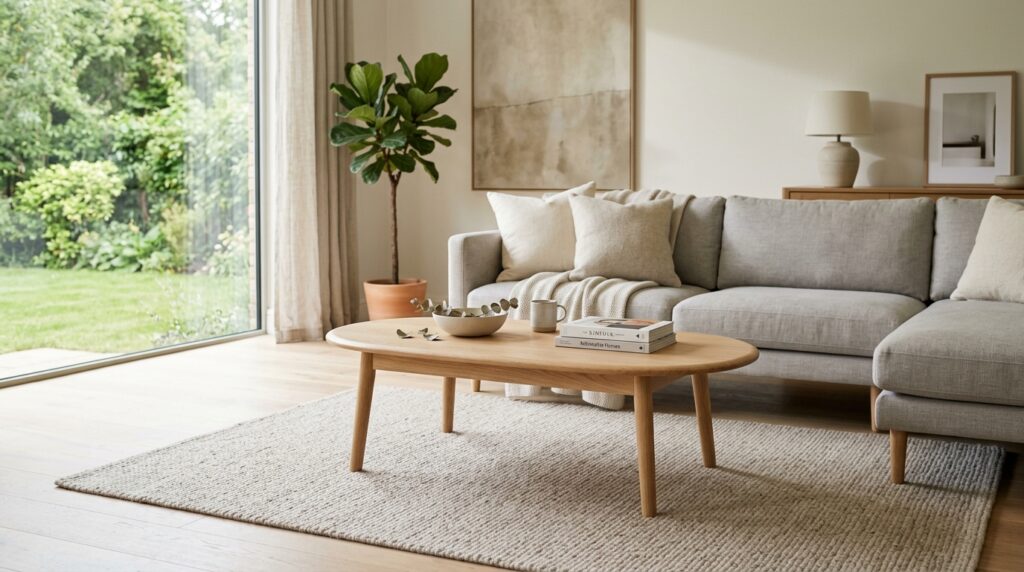
Caption: A coffee table with a lower shelf adds extra storage without taking up additional floor space.
As a general design guideline, your coffee table should sit at roughly the same height as your sofa’s seat cushions, or a couple of inches lower — this keeps the room feeling balanced and makes it comfortable to reach drinks or set down a plate. Leave enough space (commonly recommended around 14–18 inches) between the coffee table and the sofa so you can walk through without bumping your shins.
Shape matters more than people expect. If you have young kids, an oval or round table without sharp corners is a safer, more forgiving choice. In smaller rooms, a narrow rectangular or oval table keeps walkways open, while larger living rooms can handle a bigger round or square table as a centerpiece.
Quick bullet takeaways:
- Match coffee table height to sofa seat height or slightly lower.
- Leave 14–18 inches of space between the table and seating.
- Choose rounded edges if you have young children.
- Look for a table with a lower shelf for extra storage in small spaces.
| Oval / Round | Small to Medium | High (no sharp corners) |
| Rectangular | Medium to Large | Medium |
| Square | Large, open layouts | Medium |
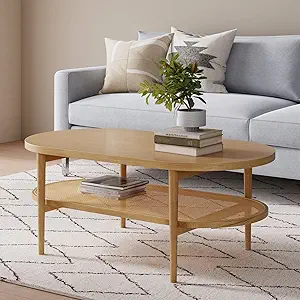
Our Pick: Nathan James Sonia Coffee Table with Storage Shelf
A pill-shaped, light wood coffee table with a bottom storage tier and rattan accents — a versatile, mid-century-inspired piece that pairs well with almost any decor style.
Pro Tip: If your living room doubles as a home office or gaming space, look for a coffee table with a lift-top or storage compartment — it quietly doubles as a workspace or hides cables and controllers.
How to implement: Measure from your sofa’s front edge and mark 14–18 inches out on your floor plan — that’s roughly where your coffee table’s edge should land.
5. Add Storage Furniture
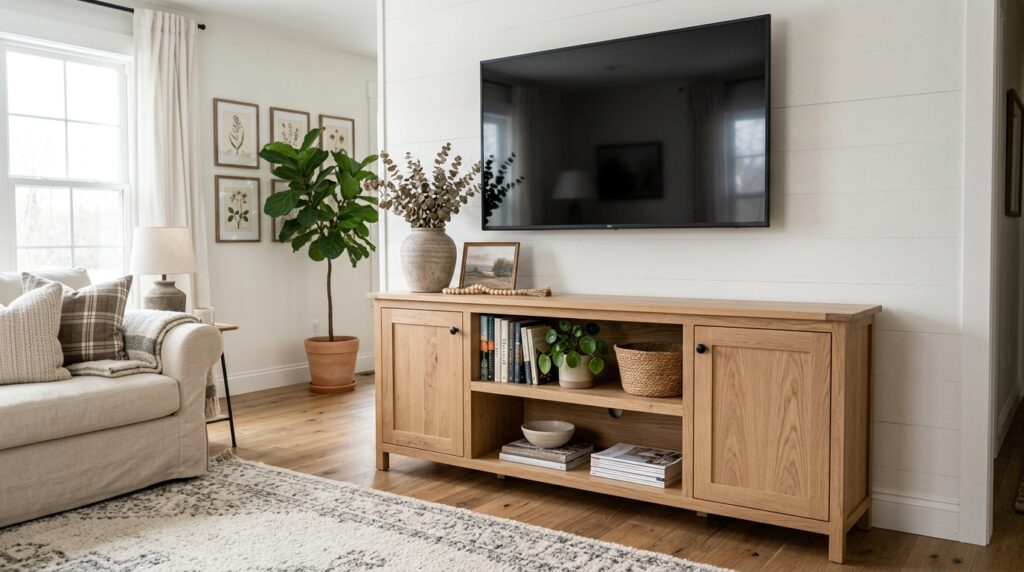
Caption: A TV stand with mixed open and closed storage keeps electronics organized without hiding everything away.
Living room storage isn’t just about looking tidy — it’s what keeps remotes, cables, board games, and media devices from taking over your coffee table. A TV stand or media console with a mix of open shelves and closed cabinets gives you the best of both: open shelves for display (books, decor, a favorite plant) and closed doors for the things you’d rather not see, like chargers, consoles, or spare cables.
When choosing storage furniture, check the weight capacity if you plan to mount a large TV or heavy decor on top, and count how many cable management holes it has — a small detail that saves a lot of visual clutter later.
Quick bullet takeaways:
- Mix open shelving with closed cabinets for flexible storage.
- Check the weight capacity if placing a TV or heavy items on top.
- Look for built-in cable management holes.
- Choose a wood tone that complements your coffee table for a cohesive look.
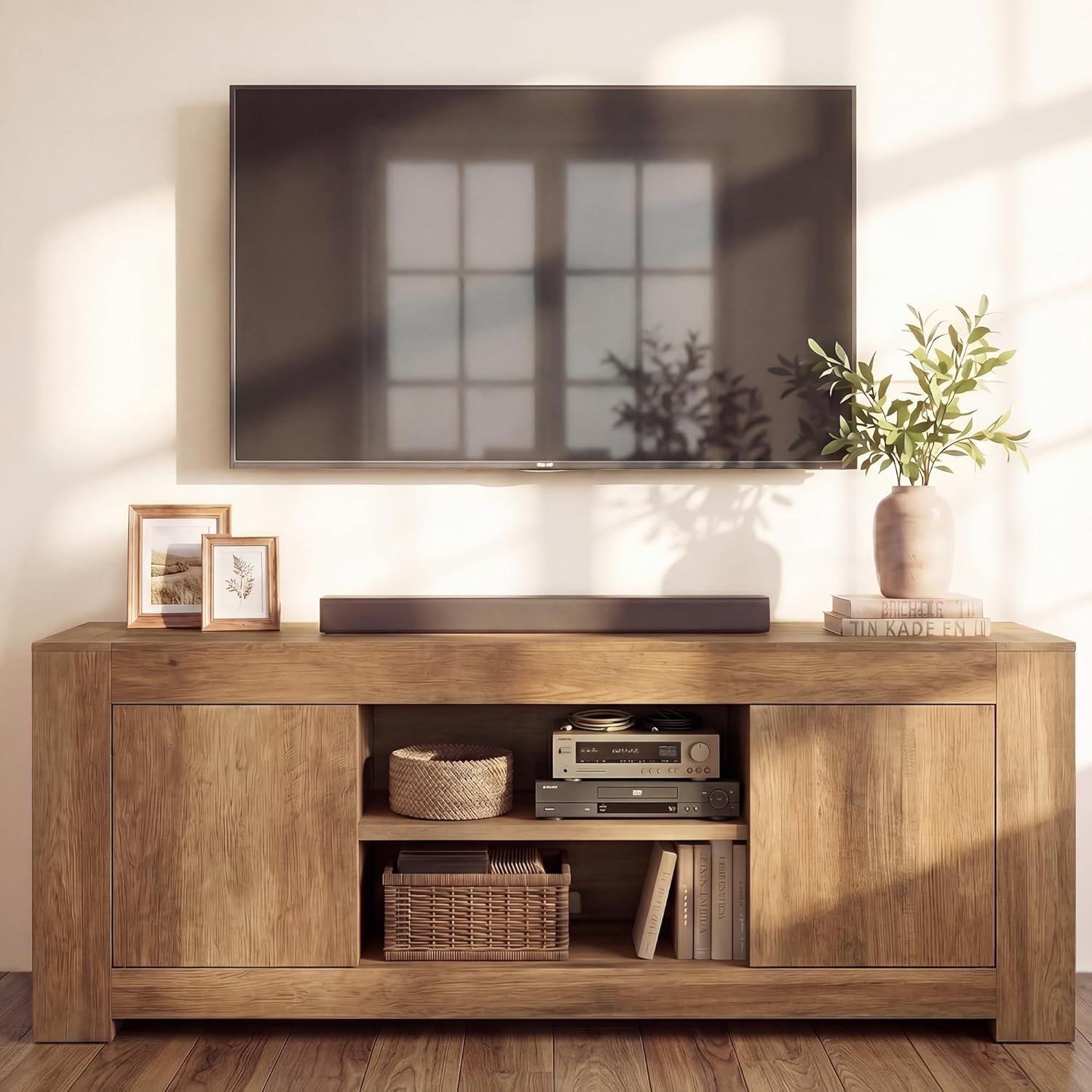
Our Pick: VASAGLE Farmhouse TV Stand with Storage Cabinets
A natural oak media console with two enclosed cabinets, open shelving, an adjustable middle shelf, and cable management holes — fits TVs up to 65″ and supports up to 300 lbs.
Pro Tip: Keep your TV stand’s wood tone consistent with your coffee table (or intentionally contrast with a completely different material, like black metal) — mixing two random shades of wood is one of the fastest ways to make a room feel unplanned.
How to implement: Before buying, check your TV’s width and add at least 4–6 inches on each side to the stand’s length — this keeps the proportions looking balanced rather than a large TV overhanging a small stand.
6. Lighting Tips for Your Living Room
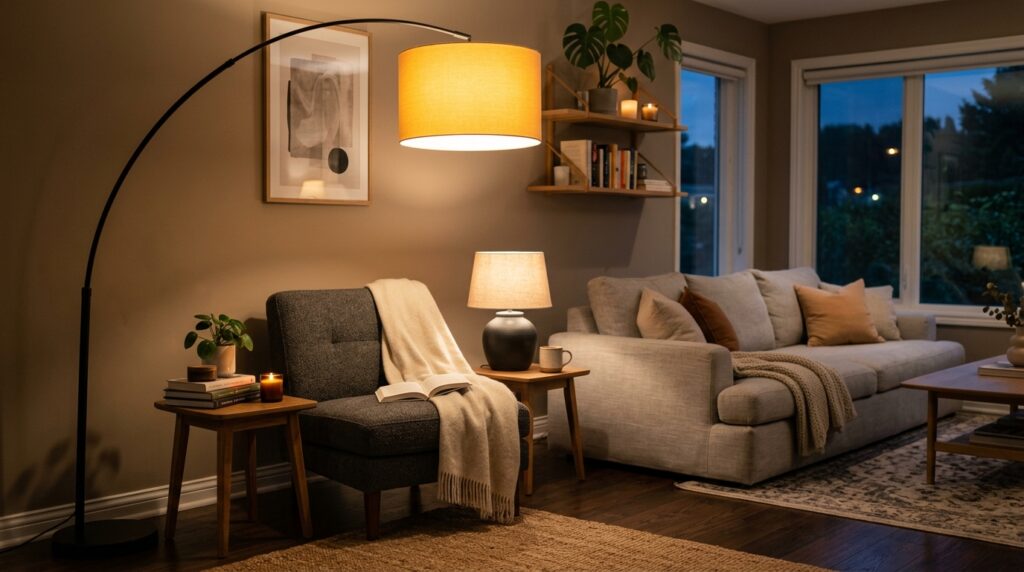
Caption: Layered lighting — overhead, floor, and table lamps — creates a warmer, more flexible living room than a single ceiling light alone.
Good lighting does more work in a living room than most people give it credit for. Relying on a single overhead light leaves the room feeling flat and eliminates any option for mood. Instead, layer at least three light sources: ambient (overhead or a floor lamp), task (a reading lamp near a chair), and accent (smaller lamps or LED strips that highlight artwork or shelves).
A statement floor lamp in a corner not only lights the room but also fills awkward space that furniture alone can’t solve — especially useful in rooms with high ceilings or large windows that make standard lamps look small.
Quick bullet takeaways:
- Layer ambient, task, and accent lighting instead of relying on one source
- Use a statement floor lamp to fill empty corners.
- Choose dimmable bulbs or fixtures for flexible mood lighting.
- Warm white light (around 2700K–3000K) feels cozier than cool white in living spaces.
Our Pick: Fansdrick 3-Light Arc Floor Lamp with Remote Control
An 80″ black arc floor lamp with three independently adjustable heads, remote-controlled dimming (5%–100%), and adjustable color temperature — a flexible statement piece for ambient or task lighting.
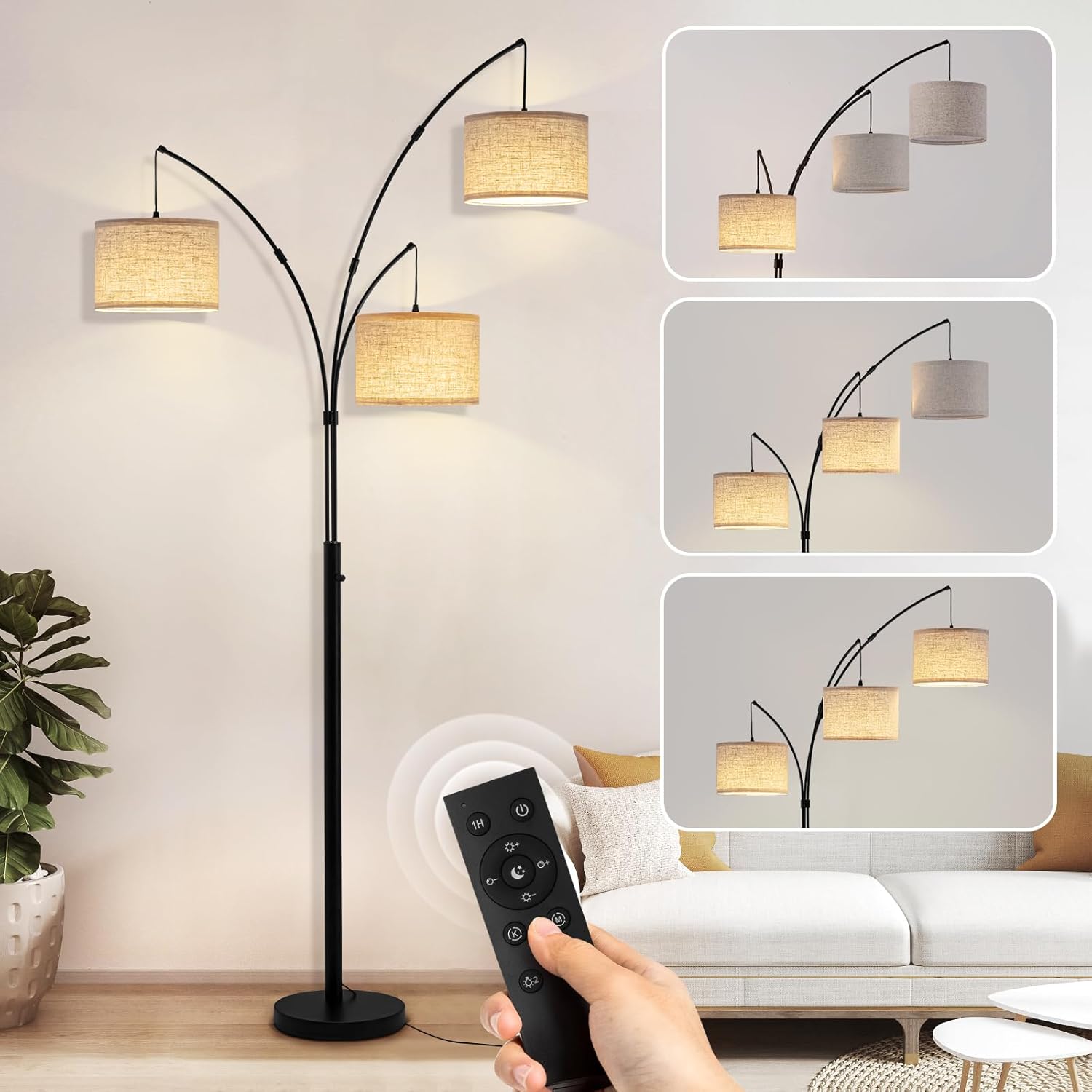
Pro Tip: Position your brightest lamp near your main reading or work spot, and keep at least one lamp on a lower, warmer setting elsewhere in the room for evenings — it makes a big difference in how “cozy” the space feels on camera and in person.
How to implement: Walk around your living room at night with just your phone flashlight and note which corners feel dark — those are your priority spots for a new lamp.
7. Mixing Styles and Materials
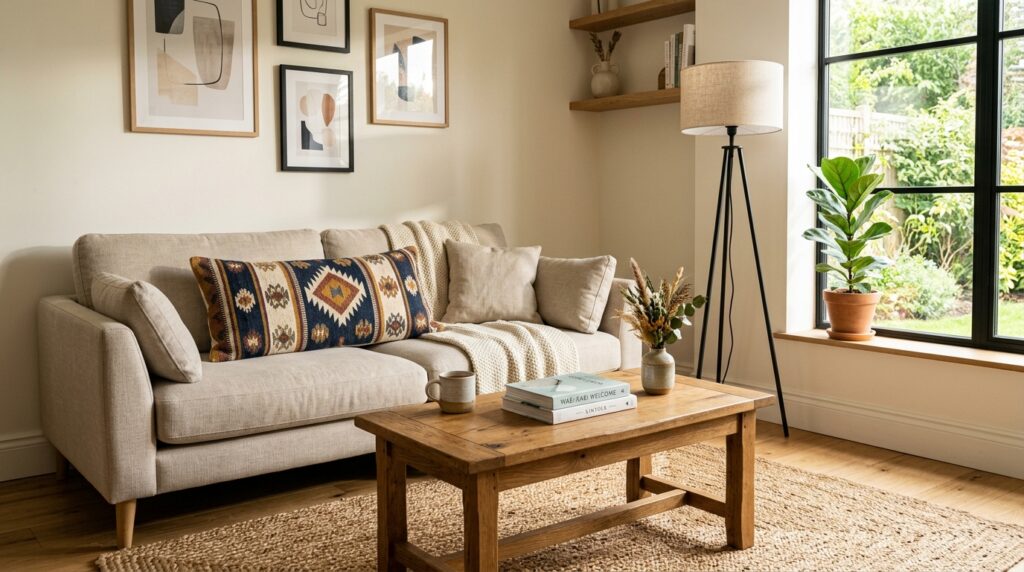
Caption: Combining two or three materials — like wood, metal, and woven textures — adds depth without looking mismatched.
You don’t need every piece of furniture to match perfectly — in fact, a living room where everything is the same wood tone and fabric can end up feeling flat, like a furniture showroom rather than a lived-in home. A well-designed room usually mixes a few materials: a wood coffee table, a metal-legged lamp, a woven jute rug, and a fabric sofa can all coexist beautifully as long as there’s a common thread, like a shared color palette or a consistent style era (mid-century, farmhouse, modern).
A helpful rule of thumb many designers use: keep about 80% of your room in one consistent style, and let the remaining 20% introduce contrast — a bold accent chair, a patterned rug, or a unique light fixture.
Quick bullet takeaways:
- Mix 2–3 materials (wood, metal, fabric, woven textures) for depth
- Use a consistent color palette to tie mismatched materials together.
- Follow the 80/20 rule: mostly consistent style, one or two contrasting accents.
- Avoid using more than two different wood tones in the same sightline.
Pro Tip: If you’re unsure whether two pieces “go together,” check whether they share at least one element — the same color family, a similar leg shape, or matching metal finishes. That one shared detail is often enough to tie a mixed room together.
How to implement: Lay out photos of your existing or planned furniture side by side and check that at least two items share a color, material, or finish before finalizing your purchase.
8. Set a Realistic Budget

Before you start shopping, decide roughly how much you’re willing to spend overall, then break that down by piece. Sofas and coffee tables tend to be the most-used, longest-lasting items in the room, so it’s usually worth spending more there and saving on lower-impact pieces like side tables or decor, which can be swapped out cheaply later without much loss.
A simple, realistic living room furniture refresh — sofa, coffee table, TV stand, floor lamp, and accent pillows — can often be put together in the $600–$1,200 range, depending on brand and materials, without sacrificing quality on the pieces that matter most.
Quick bullet takeaways:
- Prioritize spending on high-use pieces: sofa and coffee table.
- Save on low-impact items like side tables and decor.
- Leave 10–15% of your budget for finishing touches (pillows, rugs, art)
- Compare total cost, including delivery and assembly fees.
Pro Tip: Set your budget in writing before browsing — it’s far easier to stick to a number you wrote down than one you’re mentally estimating while scrolling through tempting product photos.
How to implement: Split your total budget into rough percentages: 40% sofa, 15% coffee table, 15% storage/TV stand, 10% lighting, 10% rugs and pillows, and keep 10% as a buffer for delivery or unexpected costs.
9. Plan Your Furniture Layout for Good Flow
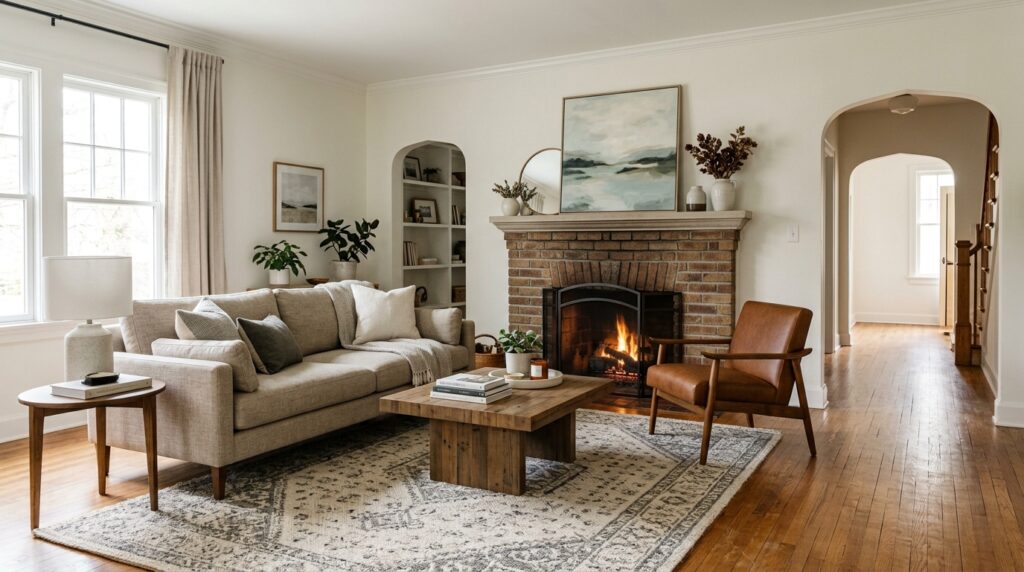
Caption: Arranging furniture around a clear focal point — like a TV or fireplace — keeps traffic flow natural and unobstructed.
Start by identifying your room’s natural focal point — usually the TV, a fireplace, or a large window — and arrange your seating to face it. Keep clear paths between entry points (doorways, hallways to the kitchen) so people aren’t forced to squeeze between furniture. Avoid pushing every piece against the wall, which is a common instinct but often makes a room feel less inviting; floating your sofa a few inches off the wall, even in smaller rooms, usually looks more intentional.
Your rug plays a bigger role in layout than most people expect — it should be large enough that at least the front legs of your main seating pieces sit on it, anchoring the furniture to a defined “zone” rather than letting pieces float randomly around the room.
Quick bullet takeaways:
- Arrange seating around a clear focal point (TV, fireplace, or window)
- Keep walkways clear between doorways and seating areas.
- Avoid pushing all furniture flush against the walls.
- Choose a rug large enough for at least the front legs of your seating to rest on it.
Pro Tip: If you’re working with an open floor plan, use your rug and furniture arrangement to visually “define” the living room zone separately from the dining or kitchen area, even without walls.
How to implement: Stand at your living room’s main entry point and check that you can see the room’s focal point clearly without furniture blocking the view — adjust your layout until that sightline is clear.
10. Common Mistakes to Avoid
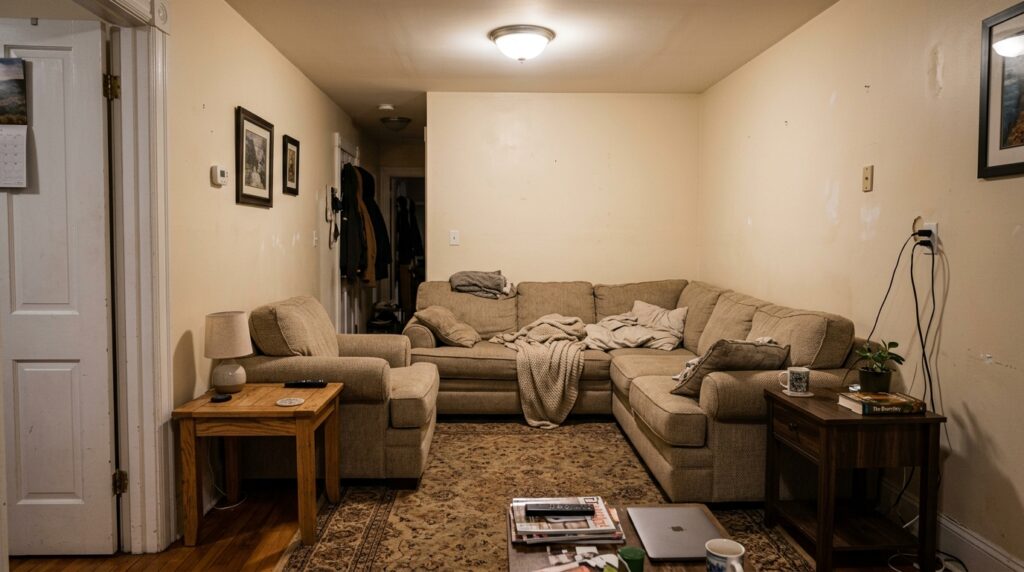
Even with the best intentions, a few mistakes come up again and again when people think about how to choose living room furniture for their space.. Here’s what to watch for:
- Buying furniture before measuring the room — the single most common and most expensive mistake.
- Choosing a sofa that’s too large or too small for the actual wall length available.
- Ignoring the walkway space results in a room that looks good in photos but feels cramped in daily use.
- Matching every piece of wood exactly can make a room feel like a showroom rather than a home.
- Skipping fabric durability checks, especially in households with kids or pets.
- Under-lighting the room by relying on a single overhead fixture.
- Overspending on rarely-used decor instead of prioritizing the sofa and coffee table.
Pro Tip: Before finalizing any purchase, revisit your floor plan one more time and double-check the item against your actual measurements — not just how it looked in the product photo.
Quick Summary: Key Takeaways
- Measure your room and sketch a floor plan before shopping.
- Choose a sofa sized to your wall length and lifestyle, in a durable, neutral fabric.
- Keep large furniture neutral; add color through pillows, rugs, and decor.
- Match your coffee table height to your sofa seat height, and leave 14–18 inches of walking space.
- Mix open and closed storage to keep clutter out of sight.
- Layer ambient, task, and accent lighting instead of one overhead light
- Mix 2–3 materials with a shared color palette rather than matching everything exactly
- Set a budget by piece, prioritizing the sofa and coffee table.
- Arrange furniture around a clear focal point with unobstructed walkways.
Frequently Asked Questions
What’s the first step in how to choose living room furniture?
The first step is measuring your room and setting a rough budget — this narrows your options before you even start comparing sofa styles or finishes.
What’s the best size for a living room sofa?
The best size depends on your room’s dimensions and wall length. Measure the wall where your sofa will sit and leave a few inches of space on either side, and make sure there’s enough clearance for a comfortable walkway around it.
Can I mix different furniture styles in one living room?
Yes. Mixing styles like mid-century and farmhouse can add depth and personality, as long as you tie pieces together with a shared color palette or a consistent finish, such as matching metal accents.
How much should I budget for living room furniture?
Budget based on priority: spend more on pieces you’ll use daily, like the sofa and coffee table, and less on decor or rarely-used items. A full mid-range refresh often falls between $600–$1,200.
How do I choose the right rug size for my living room?
Choose a rug large enough that at least the front legs of your main seating sit on it. This anchors the furniture to the space instead of letting the rug look like a small island floating in the room.
What’s the most important factor when choosing a sofa?
Comfort and size come first. A sofa that looks stylish but doesn’t fit your room or match how you actually sit and relax will end up being a daily frustration rather than a favorite piece.
How far apart should living room furniture be placed?
As a general guideline, leave around 30–36 inches of walking space between major furniture pieces, and keep seating no more than about 8–10 feet apart for comfortable conversation.
Do I need matching furniture sets for my living room?
No — matching sets can look polished, but many designers recommend mixing complementary rather than identical pieces to give the room more personality and visual interest.
What furniture materials are best for homes with kids or pets?
Look for stain-resistant, tightly-woven fabrics like performance chenille or microfiber, and furniture with rounded edges rather than sharp corners, especially for coffee tables.
Conclusion
Learning how to choose living room furniture doesn’t have to feel overwhelming once you break it down into clear steps: measure first, choose a sofa that fits your space and lifestyle, build a neutral base with room for color, and layer in the right storage and lighting. The goal isn’t a showroom-perfect room — it’s a living room that actually works for how you and your family use it every day.
If your living room is on the smaller side, check out our Small Living Room Ideas guide for space-saving layout tricks. And once your furniture is in place, our Living Room Mirror Ideas post is a great next step for adding light and depth to the finished space.
Now that you know how to choose living room furniture step by step, grab your tape measure, sketch that floor plan, and start with just one piece — the rest of the room will follow.
This post contains affiliate links. If you purchase through one of these links, we may earn a small commission at no extra cost to you. We only recommend products we genuinely believe add value to your space.
Pingback: Black Accent Wall Ideas That Look Amazing in Real Rooms