
By Abdul Rehman
This post contains affiliate links. If you purchase through one of these links, we may earn a small commission at no extra cost to you. We only recommend products we genuinely believe add value to your space.
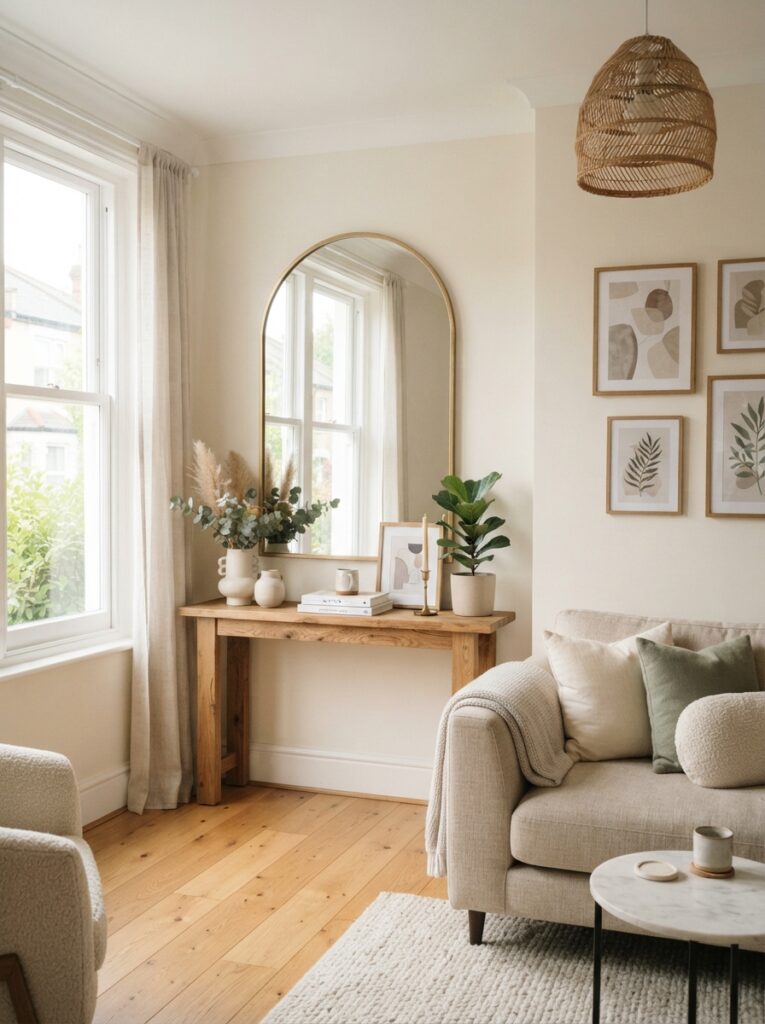
A living room without a mirror is a living room missing one of the easiest design tricks in the book. Mirrors do more than let you check your outfit on the way out the door — used well, they bounce natural light around a room, make a cramped corner feel open, and add a layer of polish that’s hard to achieve any other way.
In our own work styling small and mid-sized living rooms, mirrors have consistently been one of the highest-impact, lowest-cost changes we recommend. A single well-placed mirror can do what an extra window can’t: instantly lift a dull room without any structural work.
This guide walks through 21 living room mirror ideas — covering placement, shapes, styles, and budget — so you can find the approach that actually fits your space, not just what looks good in a showroom.
Table of Contents
This guide starts with why mirrors matter in a living room, then moves into placement rules that most people get wrong. From there, we cover statement mirror styles — large, round, and gallery arrangements — followed by practical advice on using mirrors for light, decorating on a budget, and choosing the right shape for your room’s proportions. We close with the most common mirror mistakes to avoid, and a FAQ section answering the questions people ask most.
1. Why Mirrors Are a Living Room Must-Have
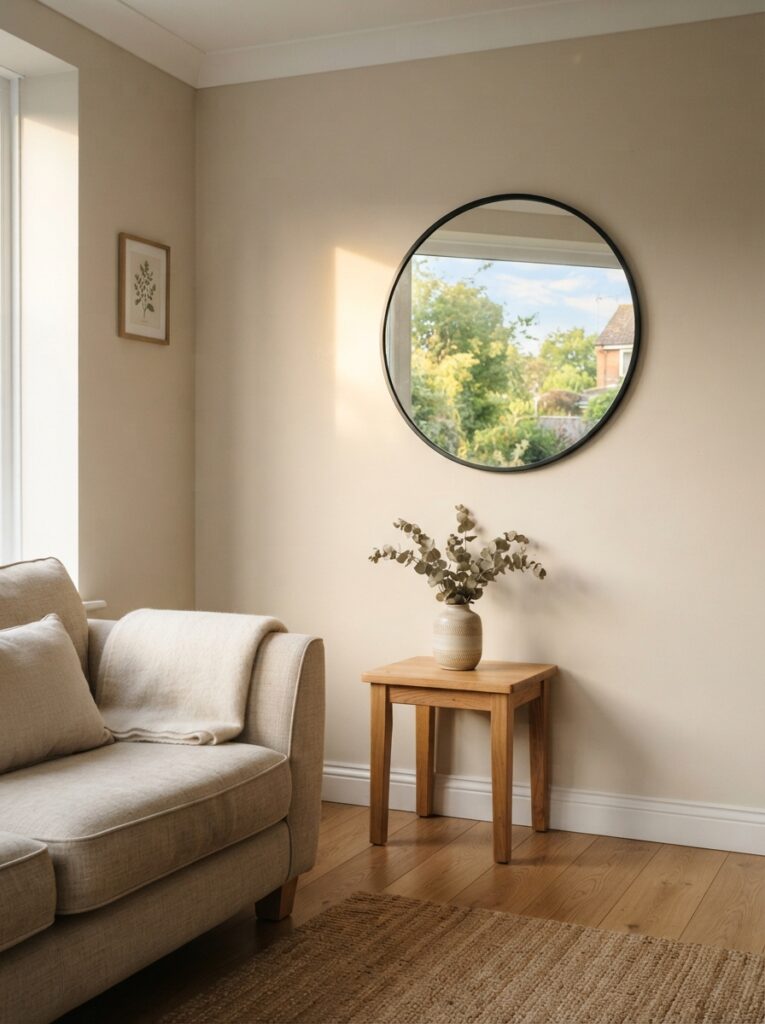
Before picking a style, it helps to understand what a mirror is actually doing for your room.
- Light multiplication — a mirror placed opposite or near a window reflects daylight back into the room, which matters most in living rooms that only get light from one side
- Perceived space — mirrors create a sense of depth, which is why they’re a go-to trick for small living room ideas specifically
- Instant style upgrade — an empty wall can look unfinished for months; a mirror finishes it in one afternoon
- Lower cost than art — a good mid-size mirror often costs less than an equivalent piece of framed art, while doing more visual work
The living room mirror ideas keyword itself tells you something: people aren’t just looking for a mirror, they’re looking for the right one for their specific room. That’s what the rest of this guide covers.
2. Best Mirror Placement Ideas for Living Rooms
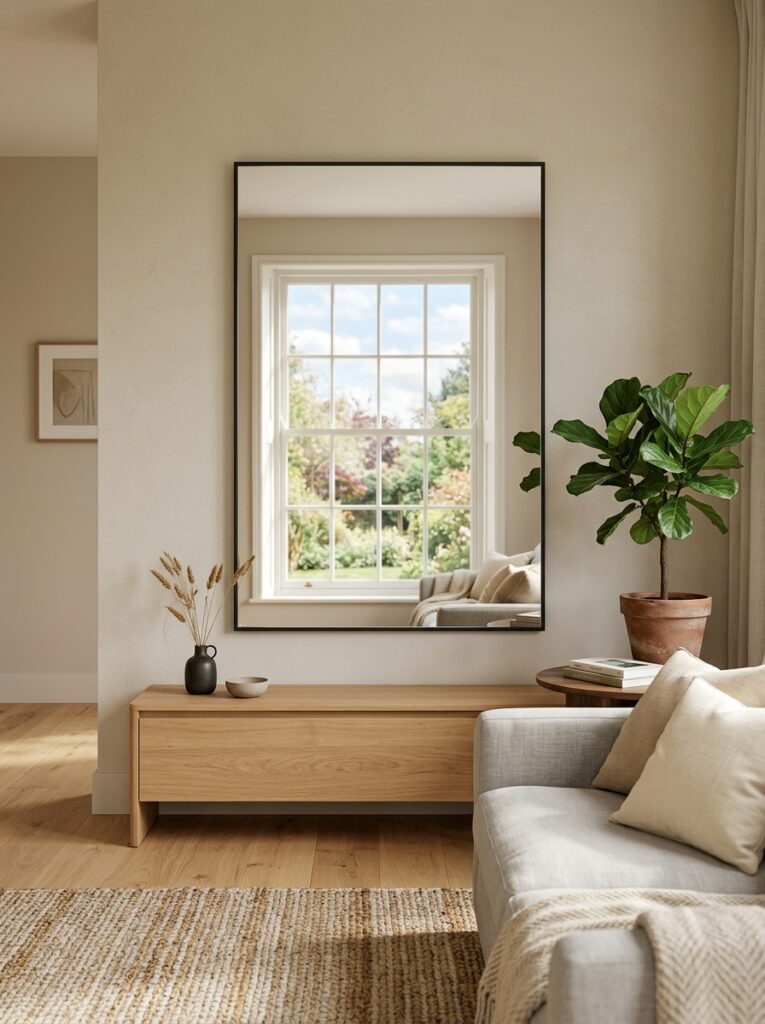
Placement is where most living room mirror ideas fall apart in practice. A beautiful mirror in the wrong spot won’t do much for the room.
- Opposite a window — this is the single most effective placement, since it reflects the most natural light back into the room
- Eye-level hanging height — the centre of the mirror should sit roughly 145–150 cm (57–60 inches) from the floor, in line with average eye level
- Avoid reflecting clutter — a mirror facing a messy bookshelf or a TV unit full of cables will just double the mess visually
- Leave breathing room — allow at least 10–15 cm of wall space around a mirror so it doesn’t compete with nearby art or shelving
Golden Rule: if you only remember one placement tip, remember this — a mirror should reflect something worth seeing twice, whether that’s a window, a piece of art, or an open doorway.
3. Large Statement Mirror Ideas for Living Room Walls
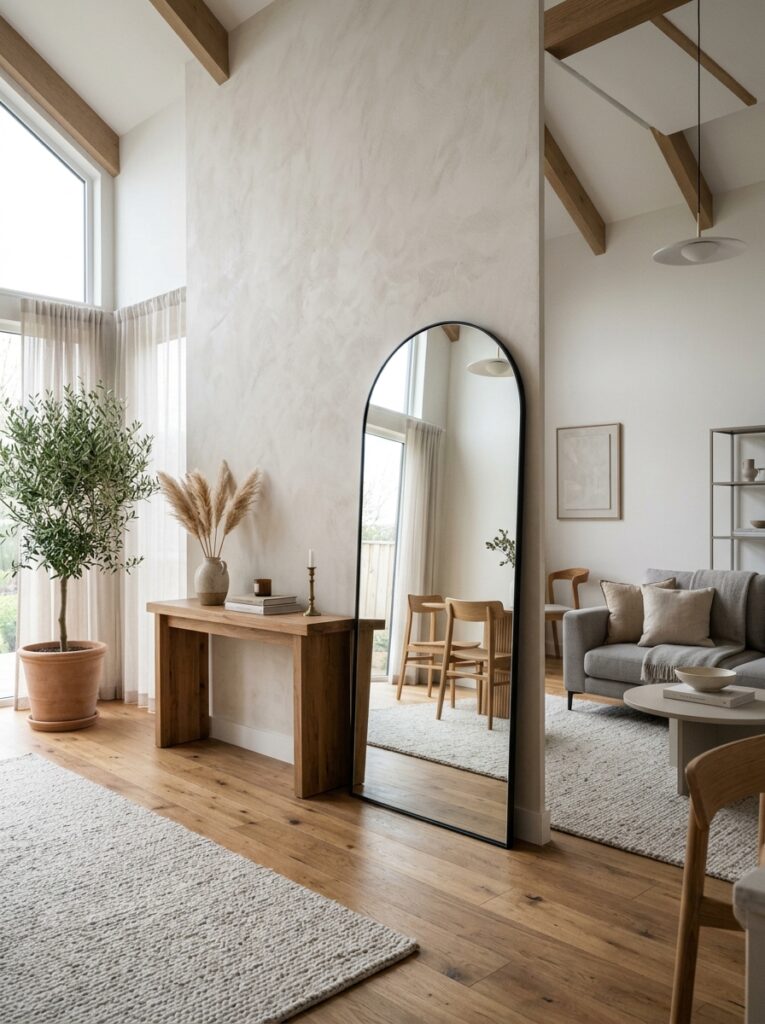
A large mirror is one of the fastest ways to change how a living room feels, especially above a console table or sofa.
- Oversized leaning mirrors — propped against the wall rather than hung, these work particularly well in living rooms with high ceilings
- Sizing rule of thumb — a mirror above furniture should be roughly two-thirds the width of the piece below it, so it feels proportional rather than oversized or lost
- Frame material matters — a thin metal or wood frame keeps the look modern, while a chunky ornate frame leans more traditional
- Best rooms for this idea — open-plan or larger living rooms, where a large mirror won’t overwhelm the space
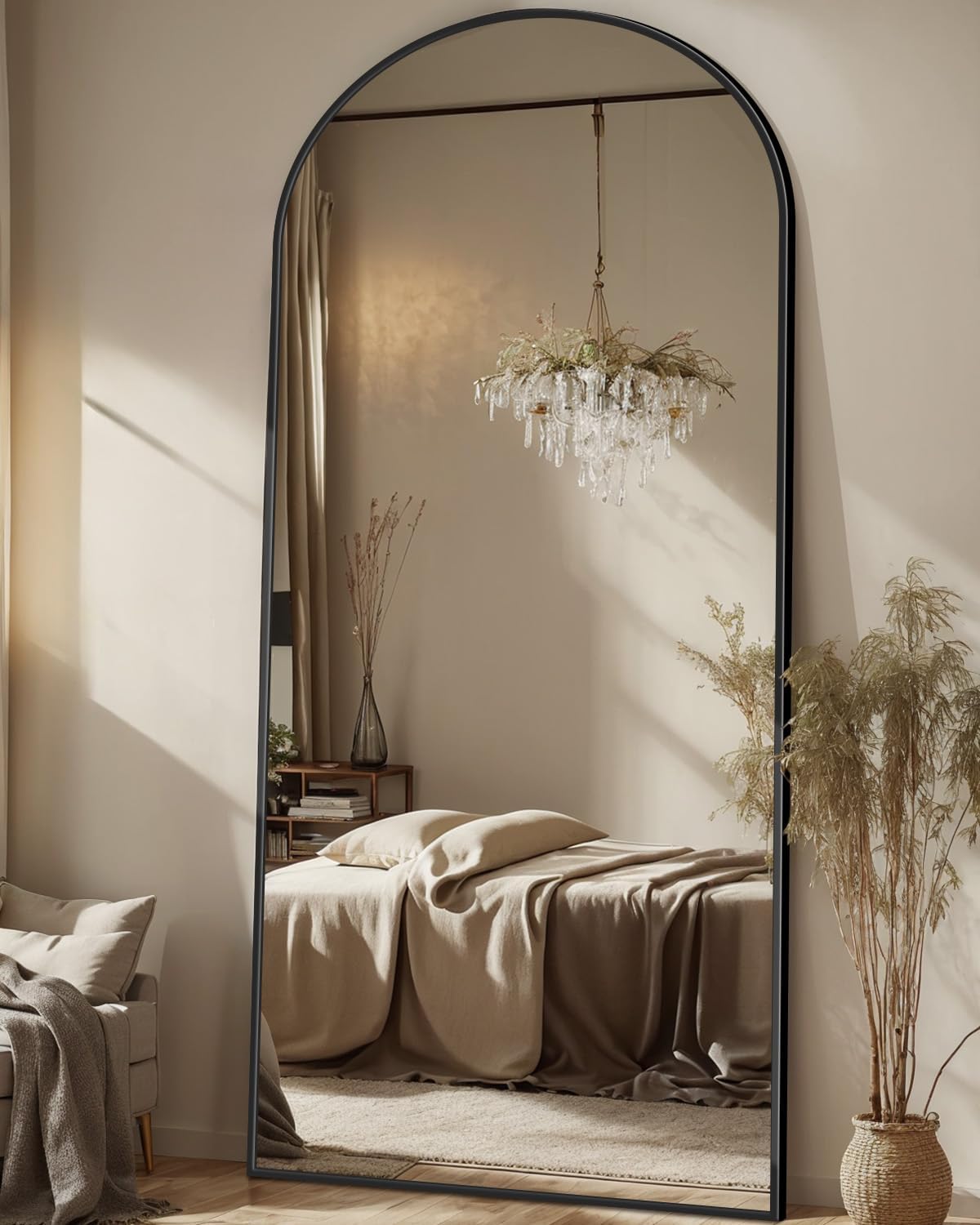
If you’re shopping for this look, an arched or rectangular floor mirror in the 150–180 cm range is a safe, versatile starting point. The Antok Arched Full Length Floor Mirror is a good example — a 71″ black aluminium-framed piece that works as a leaning, wall-mounted, or free-standing statement mirror, which makes it flexible enough for most living room layouts.
4. Round Mirror Ideas for a Modern Living Room
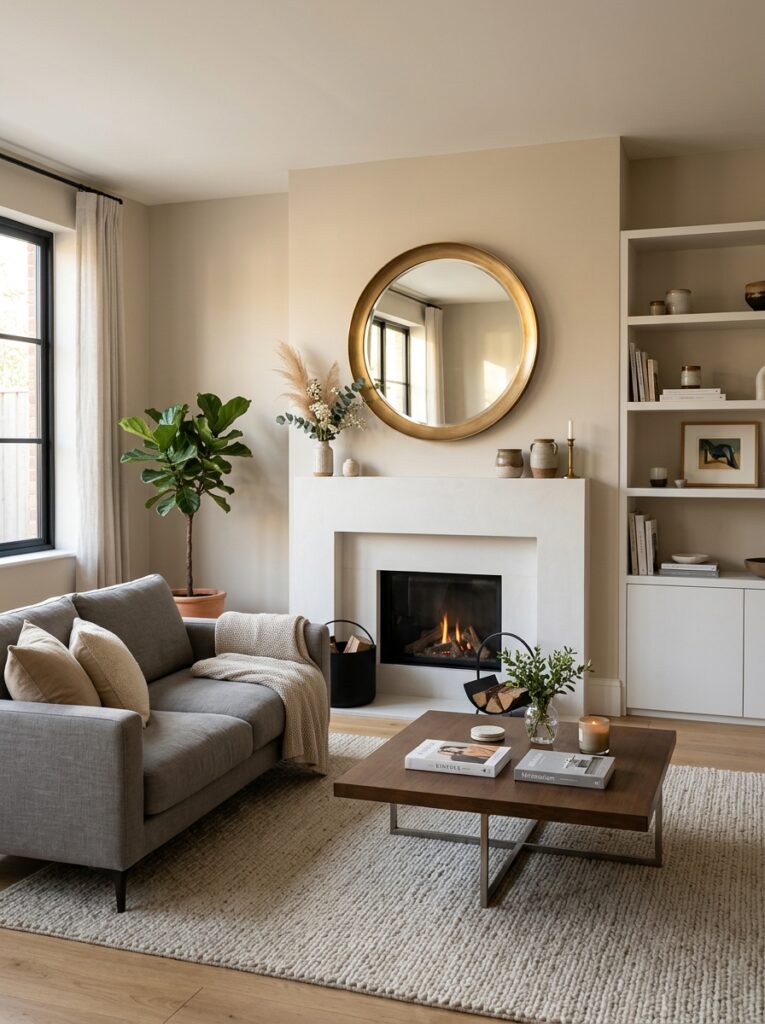
Round mirrors have become one of the most searched living room mirror ideas in recent years, largely because they soften a room full of straight-edged furniture.
- Best paired with: sofas, rectangular coffee tables, and square shelving — the contrast in shape balances the room
- Sizing guide — a round mirror between 60–95 cm in diameter works well as a standalone piece above a console or mantel
- Material trends for 2026 — brushed brass and matte black frames are outperforming polished chrome in most modern living rooms right now
- Placement tip — round mirrors work especially well above a fireplace, where their soft shape balances the hard lines of the mantel
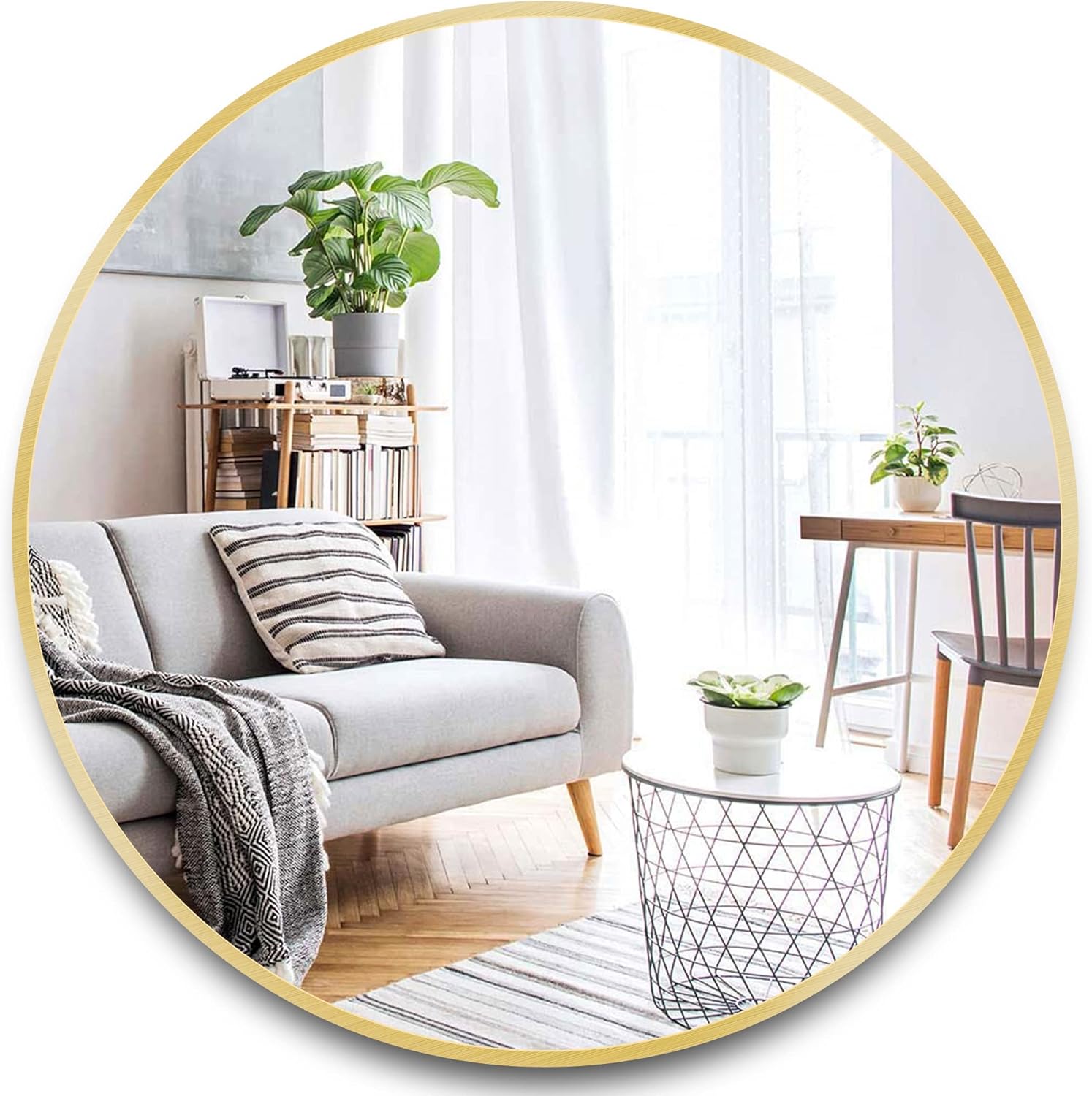
For a ready-made option, the Itrue Round Gold Mirror (36″) uses a brushed metal frame with a high-reflectivity HD glass finish, and comes with wall-mount hardware included — a straightforward pick if you want a statement round mirror without sourcing separate fixings.
5. Mirror Above the Sofa: Do’s and Don’ts
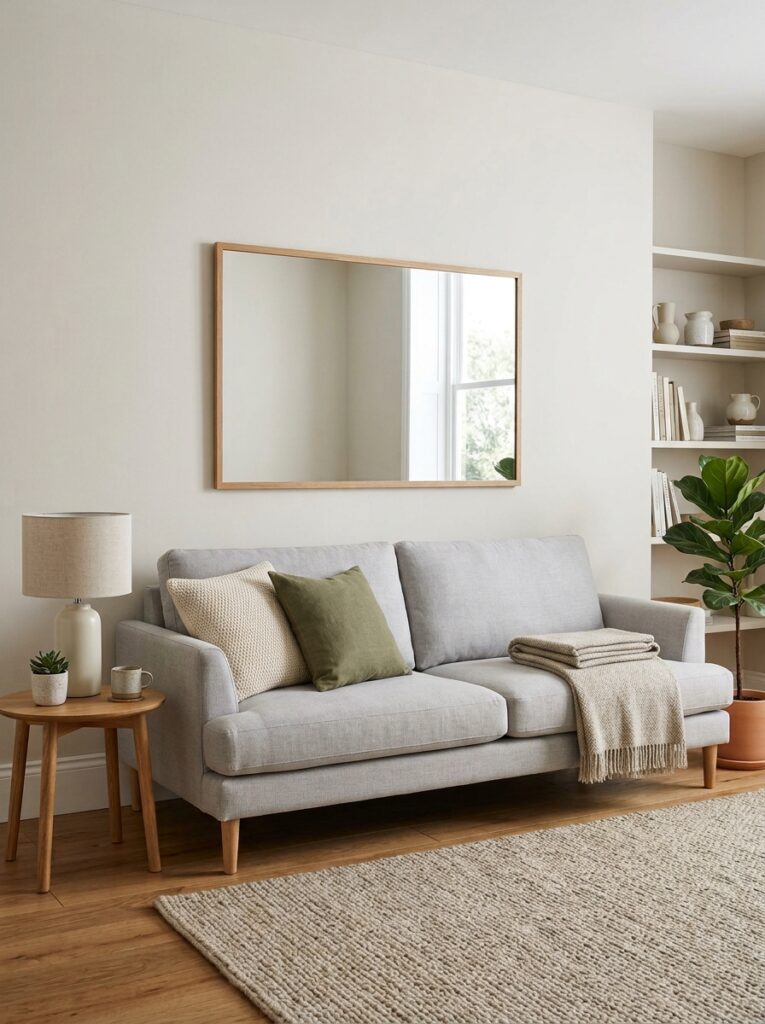
This is one of the most common placements — and one of the easiest to get slightly wrong.
Do:
- Centre the mirror above the sofa’s midpoint, not the wall’s midpoint, if the sofa is off-centre in the room
- Leave 15–20 cm of space between the top of the sofa back and the bottom of the mirror
- Choose a mirror no wider than the sofa itself
Don’t:
- Hang a mirror that’s noticeably smaller than the sofa — it reads as an afterthought
- Tilt the mirror forward unless it’s specifically designed to (some leaning styles are meant to angle slightly)
- Position it so it reflects direct sunlight into seating — this creates glare rather than ambience
6. Gallery Wall Mirror Ideas for Living Rooms
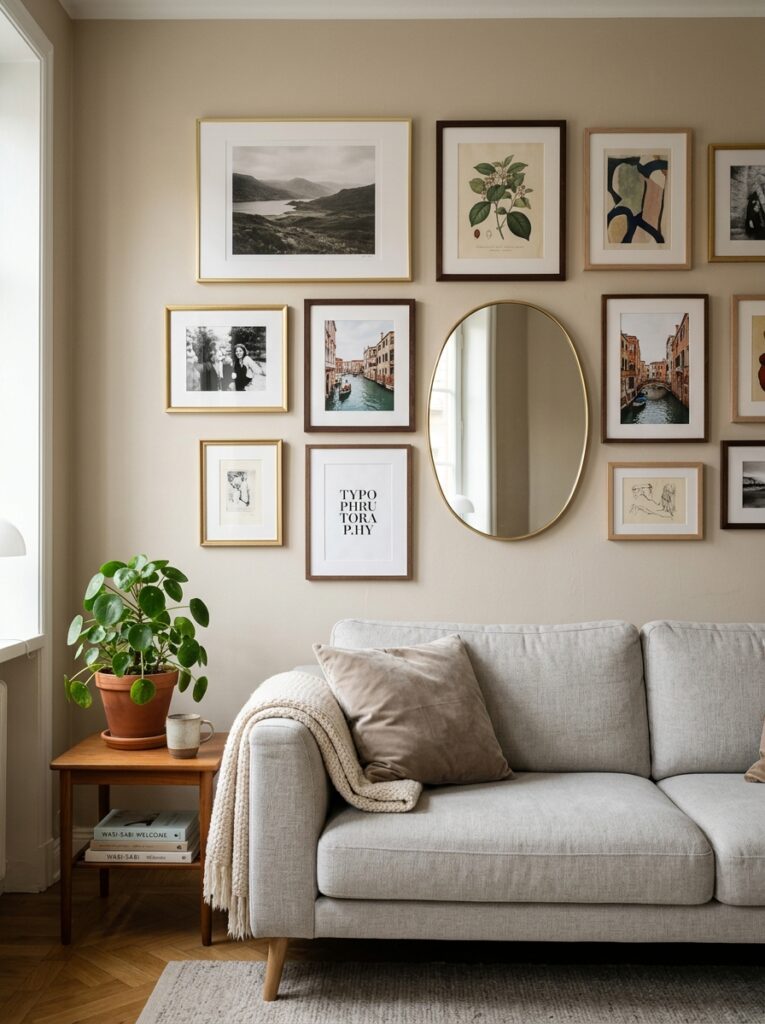
Mixing a mirror into a gallery wall is one of the more advanced living room mirror ideas, but it pays off when done with restraint.
- Ratio to follow — keep the mirror to no more than 30% of the total gallery wall, so it complements the art rather than dominating it
- Shape variety — mixing one round or oval mirror among rectangular frames adds visual interest without looking cluttered
- Grouping small mirrors — three or five small mirrors of varying sizes, grouped asymmetrically, can act as their own gallery moment
- Spacing rule — keep 5–8 cm between each frame in the grouping for a cohesive, gallery-style look
7. Mirrors That Maximize Natural Light in Small Living Rooms
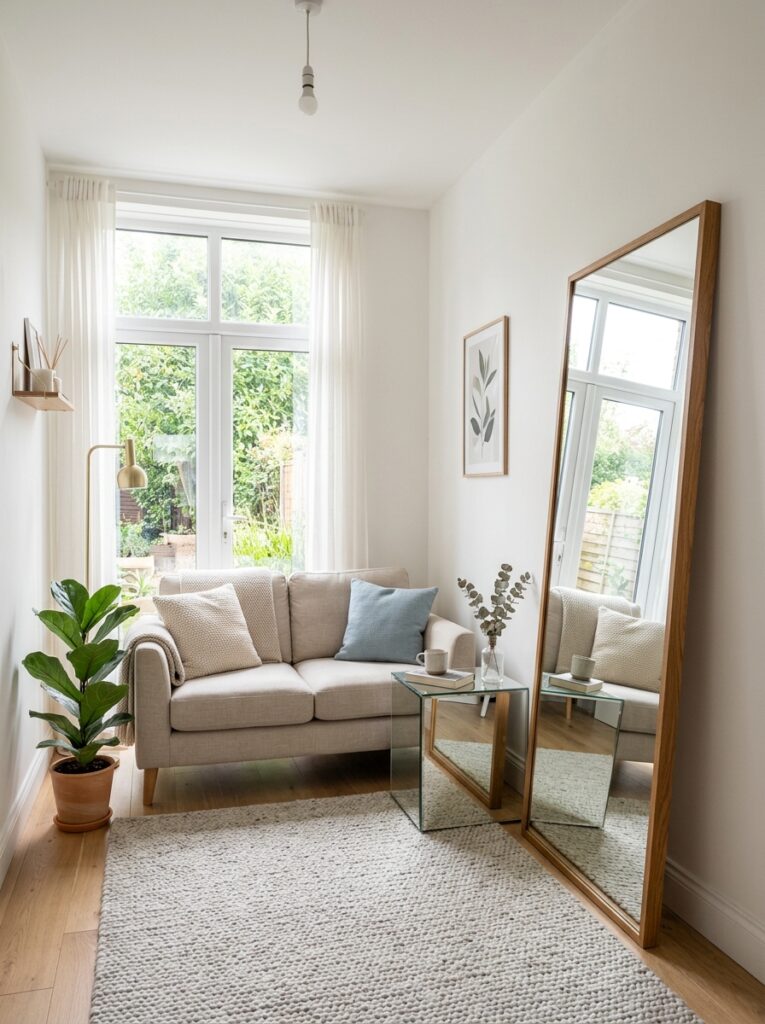
If your living room is on the smaller side, mirrors are arguably the single most useful tool you have — more than paint colour, more than furniture choice.
- Position facing the main light source — even a modest mirror facing a window will noticeably brighten a small room by early afternoon
- Full-length leaning mirrors — these draw the eye vertically, which makes ceilings feel higher and rooms feel less boxed-in
- Mirrored furniture accents — a mirrored side table or tray adds the same light-bouncing effect in a room too small for a large wall mirror
- Avoid over-mirroring — one strong mirror does more for a small room than three scattered smaller ones
We cover more space-maximizing techniques like this in our guide to 10 Small Living Room Ideas That Make Any Space Bigger, which pairs well with the mirror placements above if your living room is on the compact side.
8. Budget-Friendly Living Room Mirror Decor Ideas
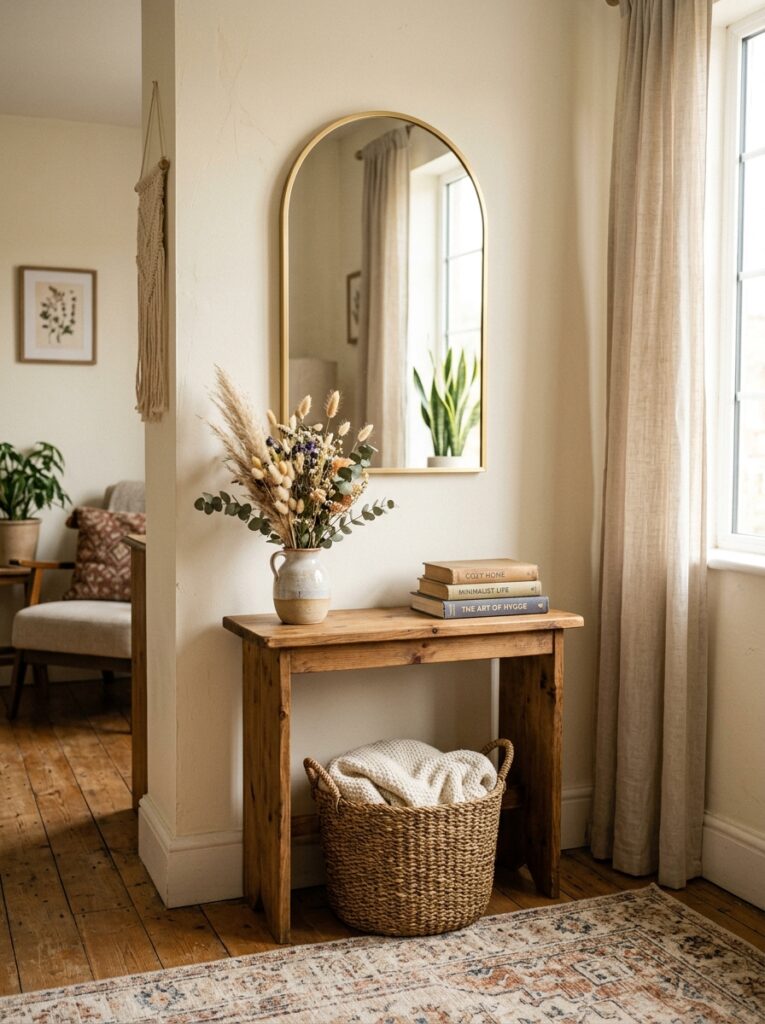
You don’t need a designer price tag to get a designer look.
- Secondhand and vintage finds — older mirrors, even with dated frames, can be spray-painted for under £10 to match a modern colour palette
- IKEA and budget retailers — several budget ranges now offer 60–80 cm round and arched mirrors under £40
- DIY framing — a plain mirror can be upgraded with a simple wood or moulding frame for a fraction of the cost of a pre-framed piece
- Repurposing — an old window frame with mirrored panels inserted makes a distinctive, low-cost statement piece
A good example in this budget range is the Sweetcrispy Arched Gold Mirror (20″x30″) — a brushed aluminium frame with shatterproof HD glass, priced under $25, and compact enough to work above a console, in an entryway, or as a smaller accent piece in the living room.
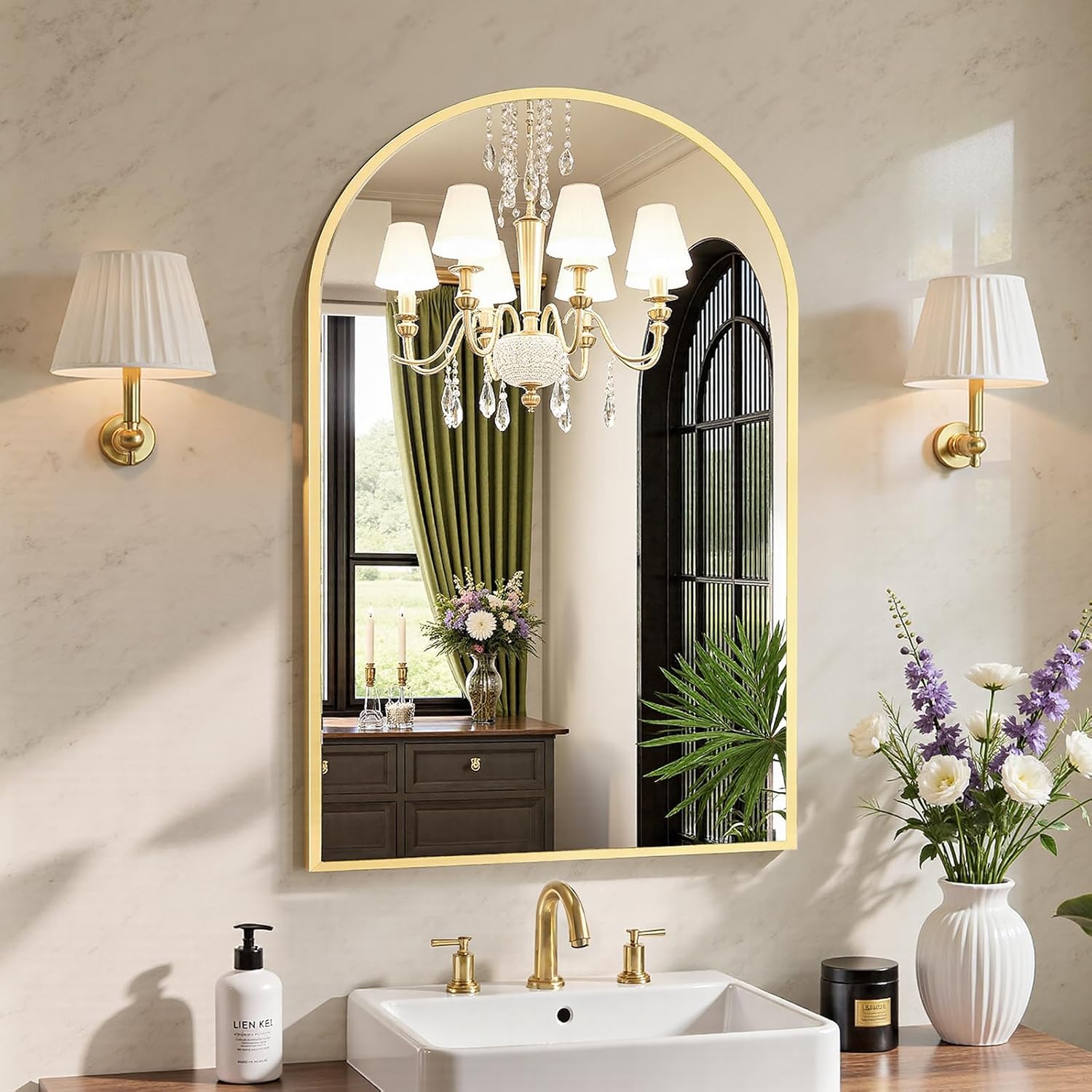
9. Choosing the Right Mirror Shape and Style for Your Living Room
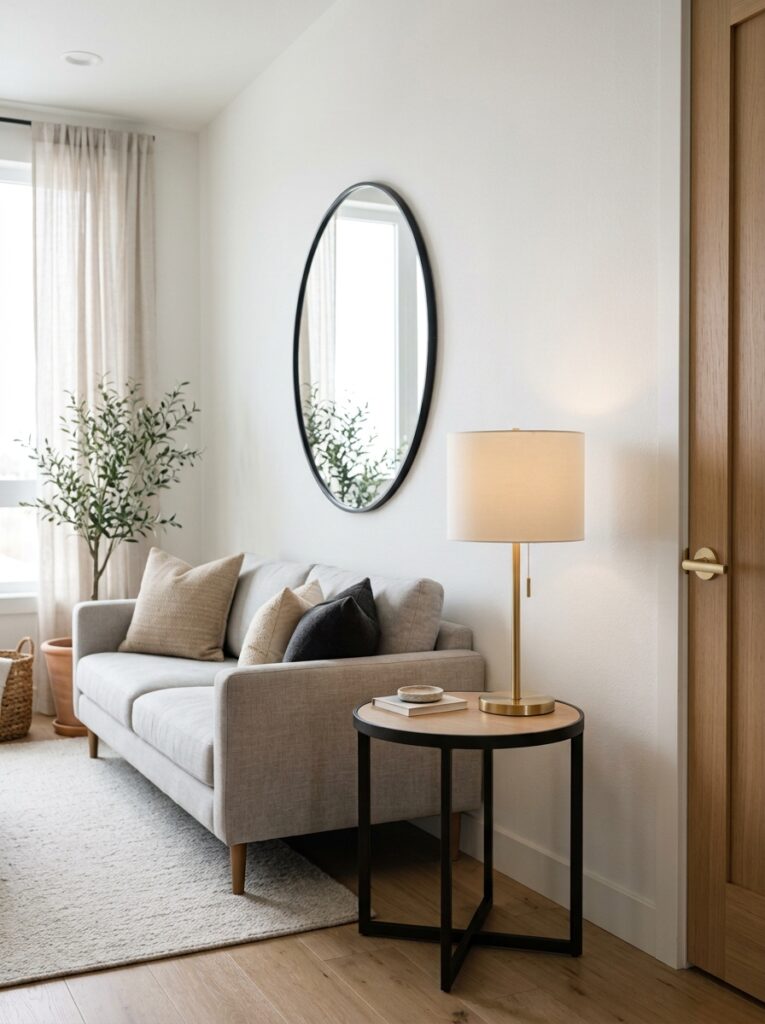
Not every shape suits every room. Matching mirror style to room style avoids the mismatched look that undermines otherwise good living room mirror ideas.
- Traditional living rooms — ornate, gilded, or wood-framed mirrors in oval or rectangular shapes
- Modern/minimalist living rooms — thin-framed round or asymmetric mirrors in black, brass, or unframed glass
- Rustic or farmhouse living rooms — distressed wood frames, often in rectangular or arched shapes
- Coastal or Scandinavian living rooms — light wood, rattan, or white-framed round mirrors
Pro Tip: when in doubt, match the mirror’s frame material to your room’s existing metal accents (light fixtures, door handles, lamp bases) rather than to the furniture itself — it creates a more cohesive look.
10. Common Mirror Decorating Mistakes to Avoid
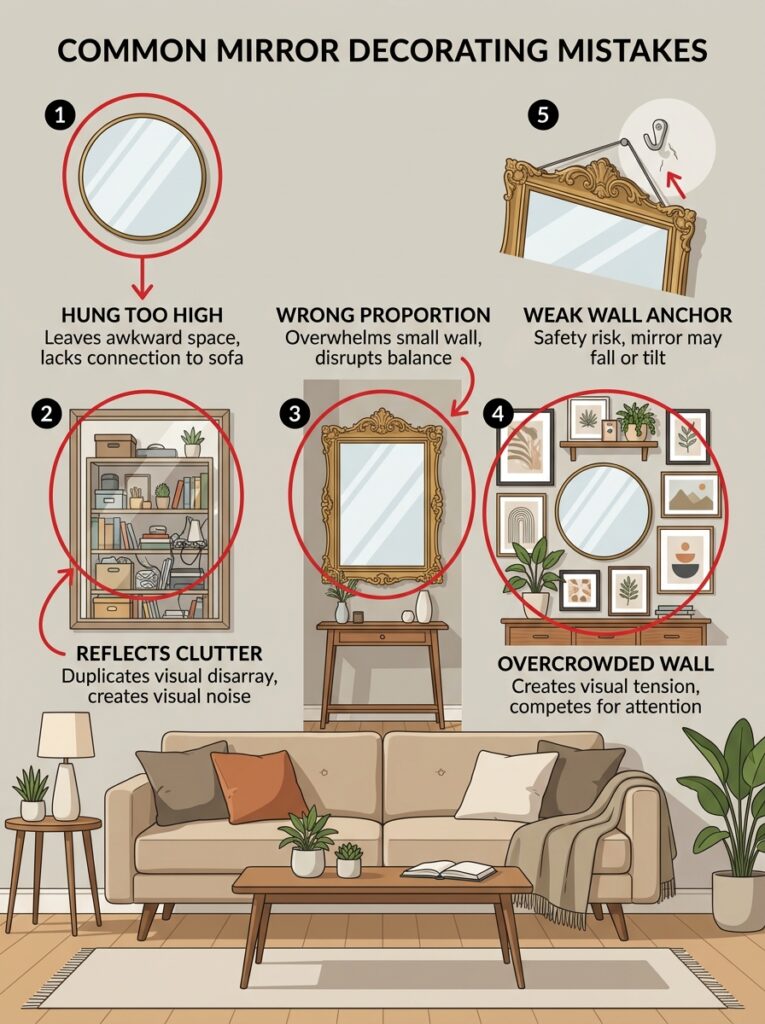
Even good living room mirror ideas can fall flat because of a handful of repeatable mistakes.
- Hanging too high — the most common mistake; a mirror hung at “gallery height” for art often sits too high for a living room, where people are usually seated
- Ignoring what it reflects — check what’s directly across from the mirror before committing to a placement
- Choosing style over proportion — a stunning mirror that’s the wrong size for the wall will always look off, regardless of how nice it is on its own
- Overcrowding one wall — a mirror competing with a gallery wall, a large TV, and shelving on the same wall creates visual noise instead of balance
- Forgetting the frame’s weight — very large or ornate mirrors need proper wall anchors, not just a standard picture hook
Frequently Asked Questions
What size mirror should I use in a living room?
As a general rule, a mirror above a sofa or console should be about two-thirds the width of the furniture beneath it. For a standalone statement piece, 90–150 cm is a versatile range for most living rooms.
Where should I hang a mirror in my living room?
The most effective spot is on a wall opposite or adjacent to a window, so it reflects natural light back into the room. Above a sofa, console table, or fireplace are also strong default placements.
Can a mirror make a small living room look bigger?
Yes. A well-placed mirror, especially a full-length or large piece positioned to reflect light or an open sightline, can make a small living room feel noticeably more spacious without any renovation.
Should living room mirrors match other metal finishes in the room?
It’s not required, but matching the mirror frame to other metal accents in the room (light fixtures, handles, lamp bases) generally creates a more cohesive, intentional-looking space.
Is it bad to hang a mirror facing the front door?
In practical design terms, it’s not harmful, but many designers avoid it because it can reflect people and movement right at the entryway, which some find visually distracting. It comes down to personal preference.
Mirrors remain one of the most underrated tools in living room design — cheap relative to their impact, quick to install, and forgiving if you change your mind later. Start with one strong piece in the right spot before adding more; a single well-placed mirror will do more for your living room than several scattered ones ever will.
Looking to shop the styles mentioned above? Browse our full roundup of recommended living room mirrors to find the right fit for your space and budget.
Pingback: Black Accent Wall Ideas That Look Amazing in Real Rooms